A Guide to Thriving.

Photograph by Rekha Tobaccowala | Provence. France. July 2026.
1. Success is the freedom to spend time in ways that gives one joy.
Success is sought by all but what is being sought?
For some it is making a mark in their field or leaving some enduring work.
For others it is seeking financial wealth or creating and nurturing a family. For some it is helping others.
For most people success also means a measure of happiness.
In the end if time is all we have then success probably has to do with how one uses time.
Ann Dillard wrote that “the way we spend our days is the way we spend our lives”
When one is financially constrained one’s mind and time are colonized by making ends meet.
When one is physically in pain or suffering from ill health it is often hard to be happy.
So, if happiness is the ability to limit the time we spend about our financial or physical situation and for most of us a certain amount of financial and physical well-being is key to being happy.
Sooner or later once these basics of not having to worry about the next rent check or waking up the next day in pain are mostly under control, the words and emotions that link the happy and successful are those of purpose, meaning, connection, flow, recognition and growth.
And these can change over time and are different for different people.
But it all comes down to having the freedom to allocate one’s time in the the way gives us joy.
How do we want to spend our time, and can we increasingly get to a place where we spend more of it in ways that give us joy?

Photograph by Rekha Tobaccowala | Provence. France. July 2026.
2. “Do not price yourself out of your dreams.”
It is often said that “it is never too late to become what we are” but for many people by following the wrong star home we lose our way. We spend most of their lives not being us. We find ourselves not “fitting” in our lives, our jobs, or our relationships.
The ability to control one’s time and find fit is inversely related to how much time one must do things to pay the bills.
Diminishing expenses can lead to expanding options.
One of the hardest decisions is to decide when one has “enough”.
Increasing one’s options by limiting one’s possessions and way of living tends to lead to more success than maximizing one’s possessions.
Pursuing “more” might force one to do work that one does not particularly enjoy or work with people who bring us down in order to pursue what the world says matters but not our heart.
Doing things that we resonate with and gets us into a flow is not only great for being happy today, but it is often a key to becoming an expert, to master and be a leader in what one does.

Photograph by Rekha Tobaccowala | Provence. France. July 2026.
3. “Do not live in other people’s minds”.
“Comparison is the thief of joy” but so is living one’s life to run up points on somebody’s else’s scoreboard of what success is.
The rise in mental anguish among many is in part how social media has accentuated the need to look good in other people’s eyes.
Caring what other people think is human and often learning and getting feedback on how one can improve is a key to success so not living in other people’s minds does not mean not listening to or not caring what other people say or think.
It means stopping using their metrics and their rulers of success to determine the way we live our lives.
We should not give somebody else a remote control to determine our lives.
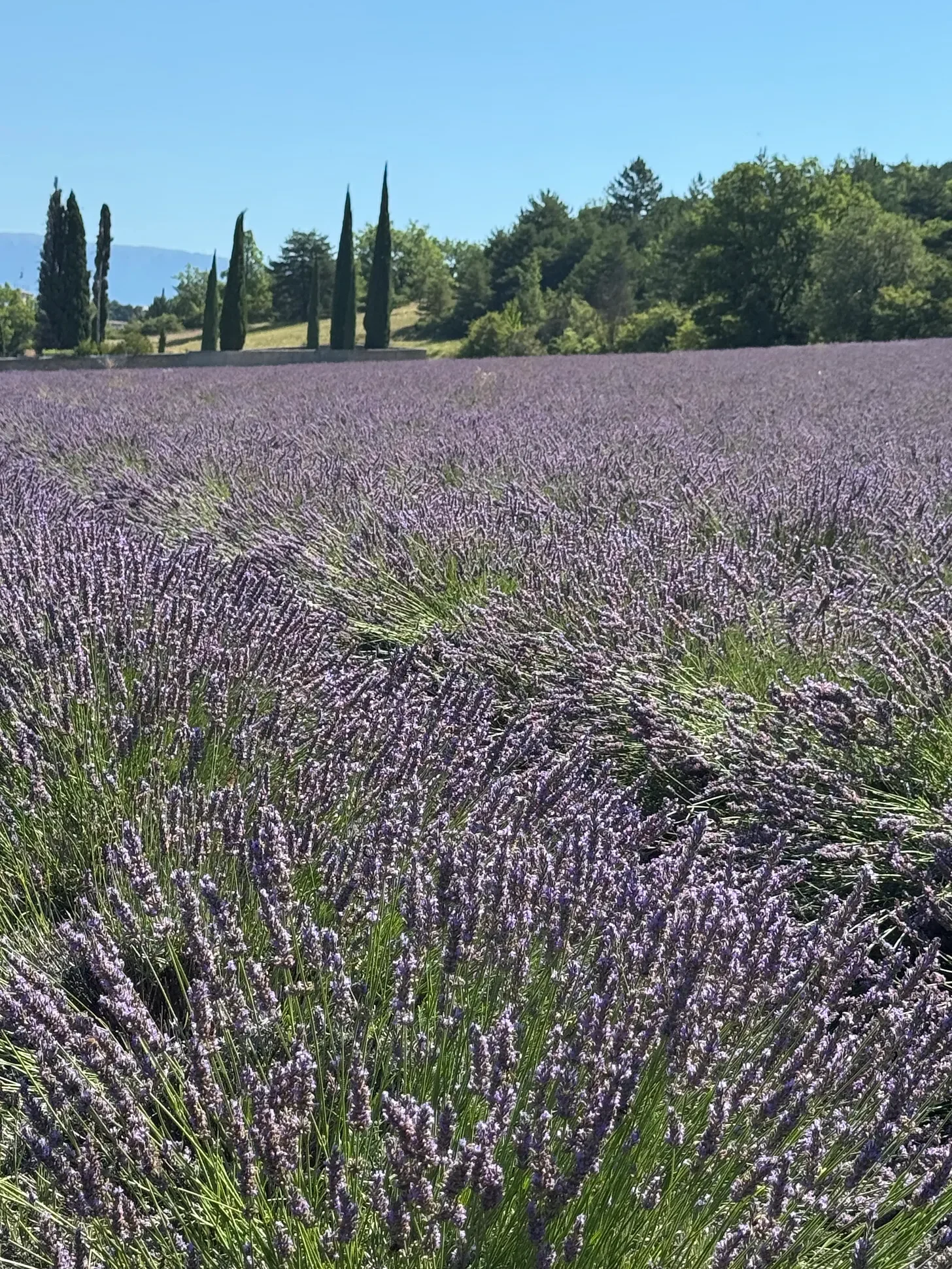
Photograph by Rekha Tobaccowala | Provence. France. July 2026.
4. “There is nothing good or bad but thinking makes it so”
While one may not agree with Hamlets’ statement that “there is nothing good or bad but thinking makes it so”, our mindsets matter a great deal in how we perceive life, how we are perceived and the degree of success we may have in our varied endeavors.
In rapidly changing and chaotic times an agile mindset can be critical to success.
While there are many personal trainers to help sculpt our bodies into somewhat supple forms, there is a scarcity in those who can show us how to exercise our minds to be as flexible as they need to be.
Mindsets matter.
Growth mindsets. Learning mindsets. Generous mindsets. Realistic mindsets.
Optimism matters.
In the novel “Gravity’s Rainbow” by Thomas Pynchon a character is described as one whose “mood collapsed the room”.
While misery may love company, nobody likes being in the company of miserable people.
Optimism is not just an essential component of innovators but a trait that we must have if we wish to inspire folks to follow us.
“Woe is me, doomed are us” works for a few drinks in a bar, but at the workplace it saps energy, hurts culture and is just a plain downer. Pessimism is something we all wallow in, but it fails to show the way out.
We should avoid practicing self-oppression or self-defeat.
To upgrade one’s mood we need to change our environment by finding people who provide clarity, self-belief and energy while leaving behind those who traffic in insecurity, control and weakness.
Remember mean people are just leaking and oozing out their own self-loathing and internal bile. Do not get angry with them but take pity on them. ( This really pisses them off and we need to be judicious in baiting these pathetic bullies!)
Another way to be optimistic is to forget all the legacy nonsense one may have to grapple with and ask that if we had a fresh sheet of paper, our talent and our assets what would we do?
Every day is a new career beginning.
Tomorrow is where we will spend the rest of our lives.

Photograph by Rekha Tobaccowala | Provence. France. July 2026.
5. “Practice Compound Improvement”.
The single most powerful concept in finance is that of compounding.
Along with the need and pursuit of love and gravity it is one of the three most powerful forces in the world.
Compounding interest and compounding returns can over time create wealth or lead one to bankruptcy depending on whether one owes or owns capital.
In a world of change we all may want to consider another way compounding can help us grow in changing times and drive mental, emotional, and even financial wealth which is compounding improvement.
There is so much we cannot control in a world driven by global, demographic, social and technological change but instead of being buffeted about helplessly in a sea of chaos maybe we can try to control and build our ourselves to be better.
Let us build habits, rituals and behaviors that we control and not others.
Three learnings about compound improvement.
a) Discipline equals Freedom: This is the title of a book by Jocko Willink, a Navy Seal.
Basically, if we want to get a grip on the world we need to get a grip on ourselves.
Things are more up to us than we think if we are willing to work at it.
b) Never graduate from school: The world is changing so fast that many of our skills and expertise and mindsets need continuous upgrading. While many of us set aside time to exercise to maintain our physical operating system we need to also feed and exercise our minds an hour a day.
The power of this habit is that at the end of a year one will have spent 365 hours learning new things. The day we start dying is the day we stop learning.
c) Deliberate Practice: Anders Ericsson wrote a book called “Peak” which is the best study of deliberate practice. Deliberate practice involves three components
1) Immediate feedback, 2) Clear goals and 3) Focus on technique.
According to his research, the lack of deliberate practice explained why so many people reach only basic proficiency at something, whether it be a sport, pastime, or profession, without ever attaining elite status.
Getting better is about behavior, iteration and resurrecting oneself from setbacks.
Photograph by Rekha Tobaccowala | Provence. France. July 2026.
One Single Thing
Last month at Oxford Yuval Noah Harari gave a talk on AI and Human Civilization. It is really worth a listen…