Career Architecting.

These days I find myself spending a lot of time providing guidance to seasoned and accomplished leaders across industries and around the world as they grapple with their future. Other times parents ask how their grown children who are early in their careers can ensure success in these tectonic times.
While each conversation is different and customized to the specific person and situation, there is one framework and approach that I believe everyone might find useful regardless of where they are in their career journey.
It is one I have used for decades and it works whether you work in a small company, a large company or for oneself.
It involves five steps.
Step one: The Nine Word Exercise.
To start we must understand who we are and what we are currently good at, or would like to be known for in the future.
One way to do this is the 9 word exercise.
Do this exercise both by yourself and get people who know you well to share their input.
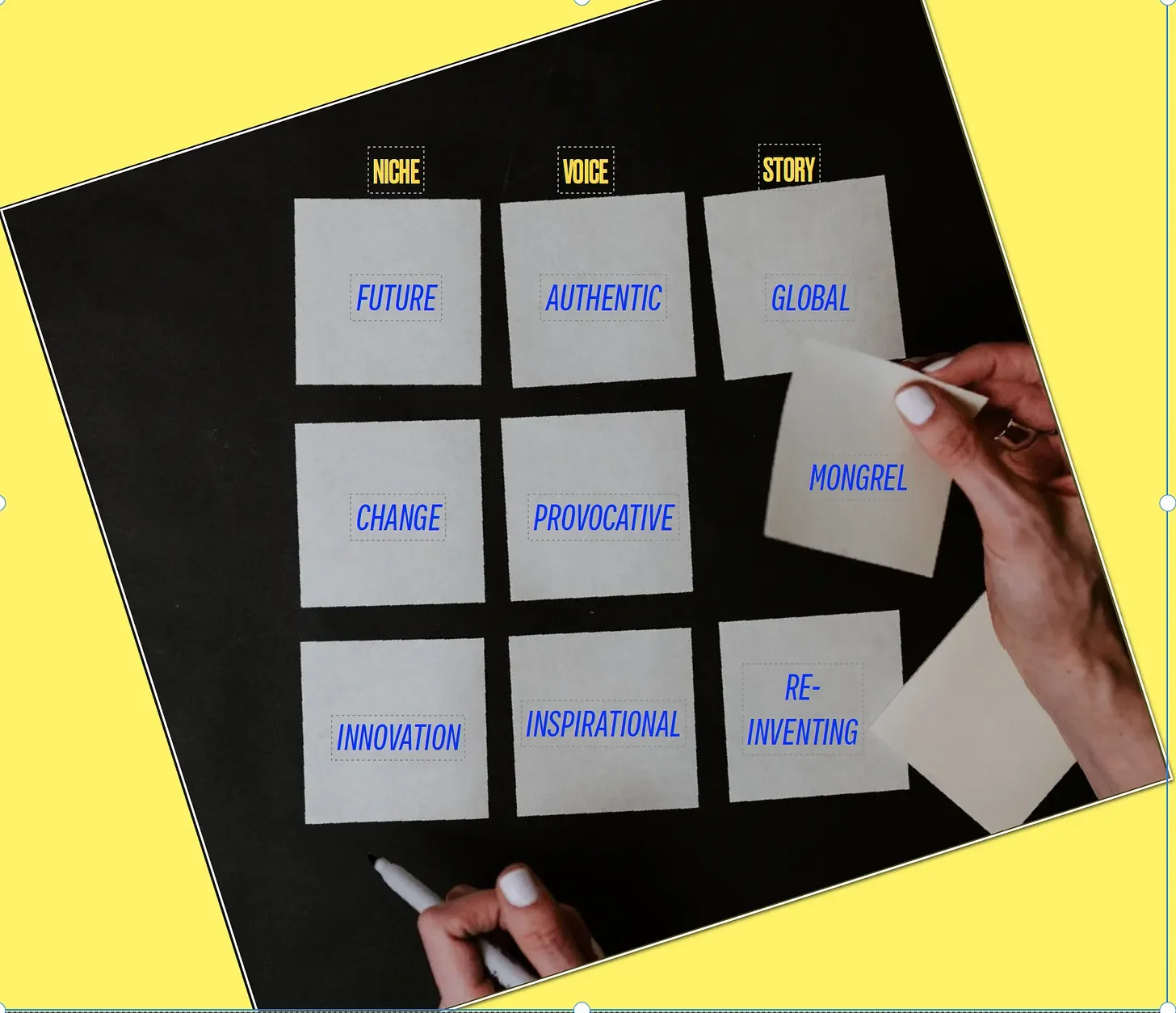
Niche: Find three words that best describe what you believe you are very good at. In my case the words are future, change and innovation.
Voice: People do not follow skills or titles but they follow people. So who are you and what is your voice? This is something we often need to ask other people for their perspectives because it is hard to hear ones own voice. In my case I have been told my voice is authentic, inspirational and provocative.
Story: Three words that define your story. Why should people believe you? What makes you who you are? In my case I am global, a mongrel ( have done multiple things across a career) and reinventing (starting new firms, pioneering new initiatives, and six and half years ago becoming a Company of One.)
One or a combination of these words will help you unearth your core expertise.
Expertise is what people will look for rather than knowledge or even experience both of whose value is plummeting in an AI Age.
My core expertise : Reinvention
Helping people see, think and feel differently about how to grow themselves, their teams and their business through reinvention.
Try the nine word exercise. For over two decades it has worked for almost everyone who has asked for advice.
Steps two and step three: Reframe Expertise and Develop Credibility/Reputation
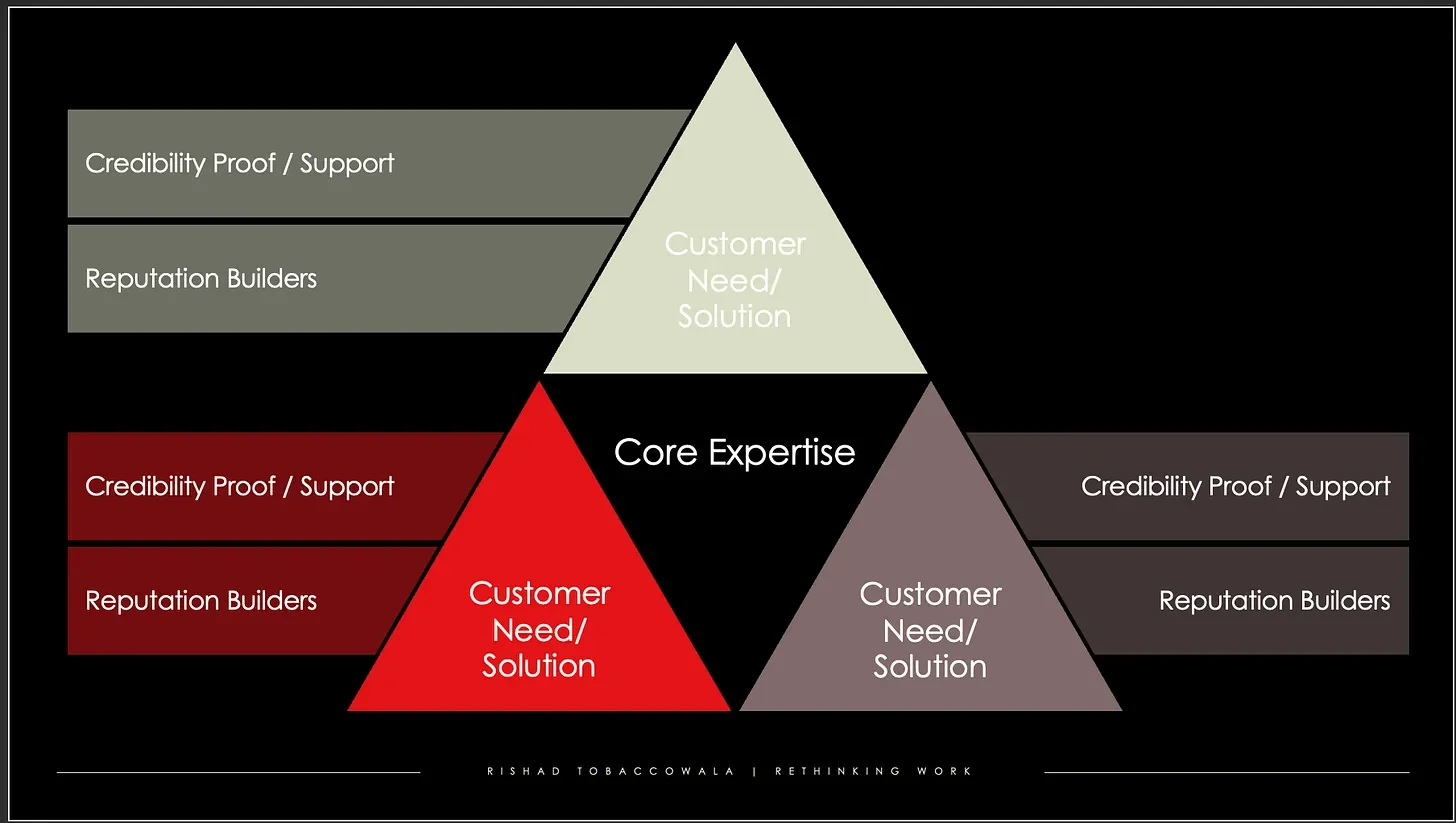
Once you have a core expertise it is important to reframe the expertise in ways that specifically address or solve customer needs. Ideally consider 3 ways you can express your expertise to meet market needs.
Once have translated your expertise to delivering on customer needs or providing solutions start listing or finding ways to ensure credibility as well as build a reputation that can attract and prove to buyers that you can solve their issues and challenges.
This model worked when I worked for a 100,000 plus person company and below is how I have successfully applied it to my second career of working as a company of one.
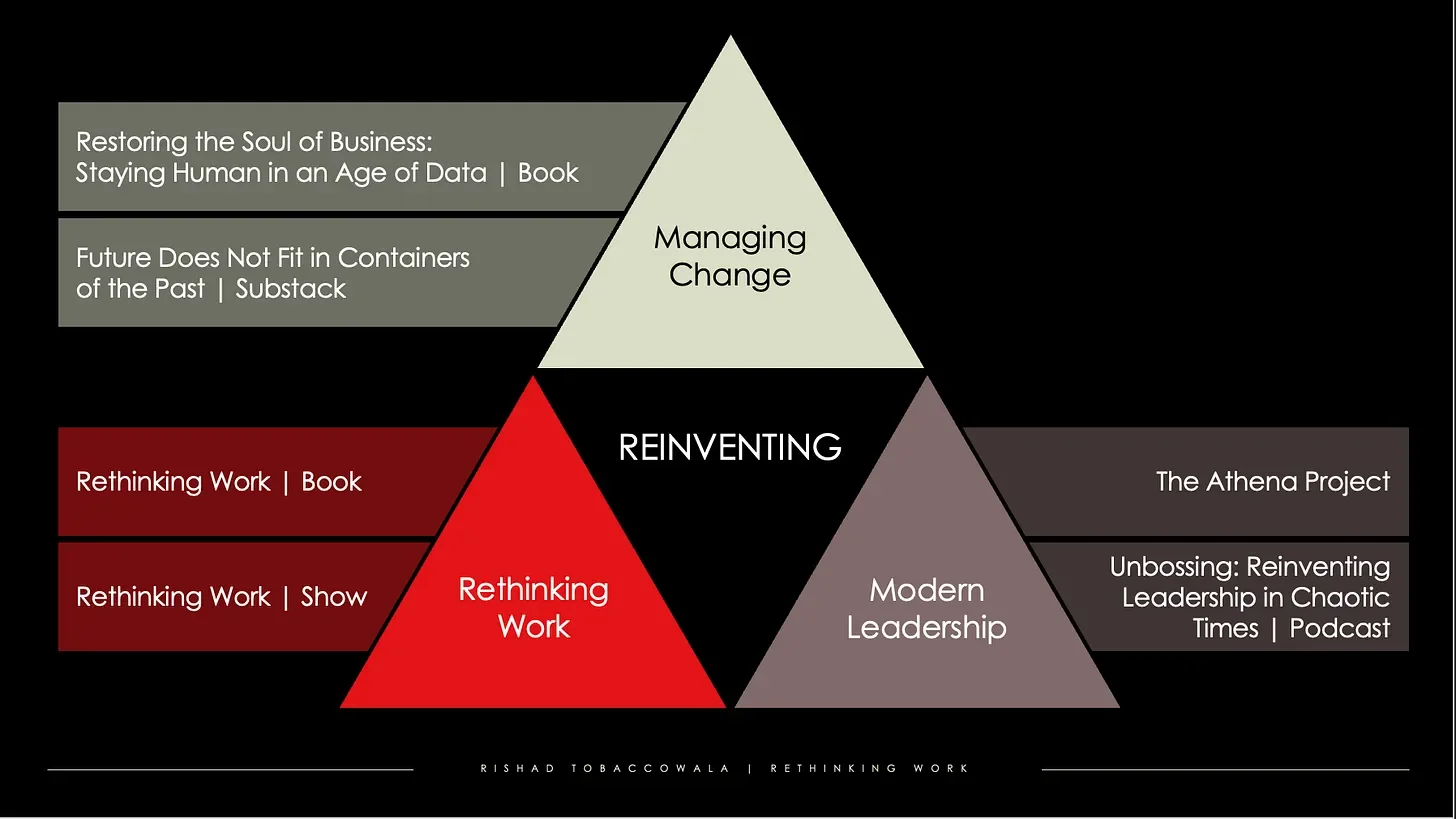
While Reinventing is my core expertise I have reframed it in ways that address specific challenges and opportunities that companies and leaders are grappling with:
a) Managing Change: Companies do not change. People do. How to ensure people change when change is really difficult? Change is much more than strategy, M&A, and re-organization. It includes growing employees future hopes and dreams and not only on growing the company, as well as incentivizing correctly and making significant investments in learning and retraining.
b) Rethinking Work: Companies need to get work done. Yesterday’s models centered primarily on offices, full-time jobs and many types of old scale are all in rapid decline due to a number of seismic shifts including generational ruptures, AI, the rise of gig work and much more. How should a company or a firm look for an AI First/Talent Anywhere Age while preserving quality, culture and competitive advantages?
c) Modern Leadership: Leadership will be key in the future but how does one lead in a world of five types of talent including Agentic Talent, a world where zones of control are being replaced by zones of influence, and where knowledge is free and much of past experience needs to be unlearnt? How does manage a multi-decade career where full time jobs get harder to retain as one grows more seasoned?
Expressing expertise in ways that solve and address a company or a customers problems is a key step but as important is proof and validation that one has the expertise and reputation to do so.
This requires one to constantly learn new skills to maintain credibility and update ones reputation.
In my case I have not rested on the laurels of distinguished multi-decade full time global career but anticipated and reinvented for the future over the past six plus years operating as a company of one to scale and deliver proof through books, substacks, podcasts, shows, and leadership projects (The Athena Project which combine events and community and content).
This ensures that companies and customers a) have constant proof of relevancy of services, b) see continuous iteration and honing of expertise and c) allows for expanding ones networks that provide new learning, perspectives and opportunities.
All of these work in synergy to unleash a flywheel. This way my one to many (content), one to some ( speaking) and one to one( advisory) monetization of my expertise feed off each other just as the skills of helping firms with rethinking work, managing change and/or modern leadership resonate and build of each other.

Step 4: Generous Partnering
A career can be long lasting if one has a vibrant and widespread network.
The best way to build such as network is to be generous.
To aggressively help others. To be there when people need guidance. To do favors. To look beyond the economics and the day to day transaction. To build good will.
This allows one to grow because it attracts people who want to work with you or bring you ideas or give you the opportunity to help them and their firms.
While I might ostensibly operate today as a company of one, any success I have is primarily due to all the people who help me constantly. This includes amazing companies like my multi-decade employer Publicis Groupe with whom I still remain connected, albeit in a small way, or more recent partners such as BCG or University of Chicago or SAP who help build out The Athena Project or teams at HarperCollins who have published and support my writing career, or Private Equity Companies like who place me on their company boards. The list goes on and on.
In a fast moving world its not just APIs ( Application Programming Interface) or MCP’s ( Model Context Protocols) that matter but HHG ( Human to Human Generosity) that makes wonderful things happen.

Step 5: Maximize Revenue Streams while Minimizing Costs.
Today when people find themselves stuck and frozen in place a key reason is financial.
We cannot afford to walk away from our firms given our needs for health care and income. Or we have a cost structure that requires us to cling to a job we do not like.
The solution for these very real problems requires time to find ways to reduce ones cost structure while finding new opportunities or additional ways of making income ( free lancing, side gigs, teaching, getting on boards). The idea is to reduce costs, build a few months of living expenses and some small new ways of income.
This allows one to either take a risk or be prepared for a “right-sizing".
The key is to remember that a career is 50 years long.
If one wants to reboot and reinvent one can do it gradually over 2 to 5 years by 1) identifying a core expertise 2) translating how that expertise can be expressed in ways that deliver solutions to companies 3) building credibility and reputation 4) being generous and 5) finding ways to maximizing revenue streams while minimizing costs.
These five steps will work even if you wish to spend decades at a company as I did. This is because the reasons a company keeps you is for expertise, for solving client problems, for keeping on top of your game and using your reputation to help the firm, and to work generously and collaboratively with everyone while maximizing revenue and minimizing costs.
This approach just makes sure that one has options in a changing world.
It allows you to stay for decades in a career because you have options and it allows one to navigate the shocks of the modern market place where we may need to go before we want to.
Along with relationships and health, meaningful and rewarding work are keys to contentment and growth.
We are not just working at a job which is like working on a a slab of marble but rather we are architecting a cathedral which is our career, our craft and our work.
So let us look up and beyond…
Career Architect!