Machine. Memory. Art. Impermanence.
Kunal Sen
Kunal Sen is an accomplished technologist and artist.
He received a PhD. in AI in the 1980’s.
Over a 20+ year career in digital technology, he designed electronic medical systems, authored technical publications, and led digital evolution and technology initiatives at Encyclopedia Britannica and Merriam-Webster where he was the Chief Information Officer.
While he continued to work in technology , beginning in 2012, Kunal shifted his primary focus to visual arts and painting.
He also authored the critically acclaimed memoir Bondhu: My Father, My Friend, reflecting on his life and his relationship with his father the legendary film director and screenwriter Mrinal Sen.
Kunal joined me in a conversation filled with deep knowledge about the interaction between AI, Art and Humans that is accessible at the bottom of this post.
It is a fascinating history of digital media, the rise of AI, the importance of memory, the quirks of being a human and a homage to art. Whether one is in business or technology or the creative arts it is a conversation everyone will learn from.
Below are some key takeaways.
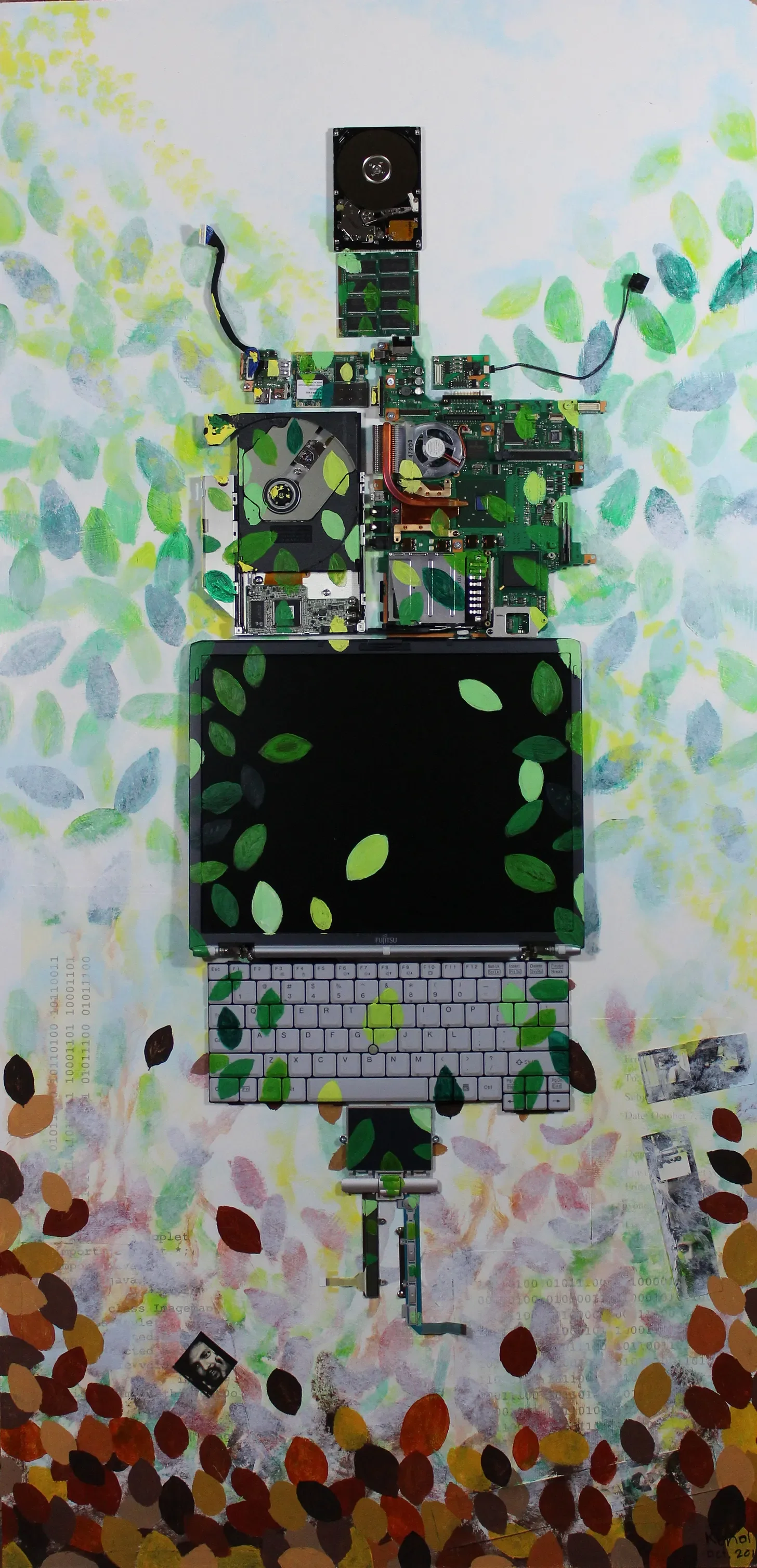
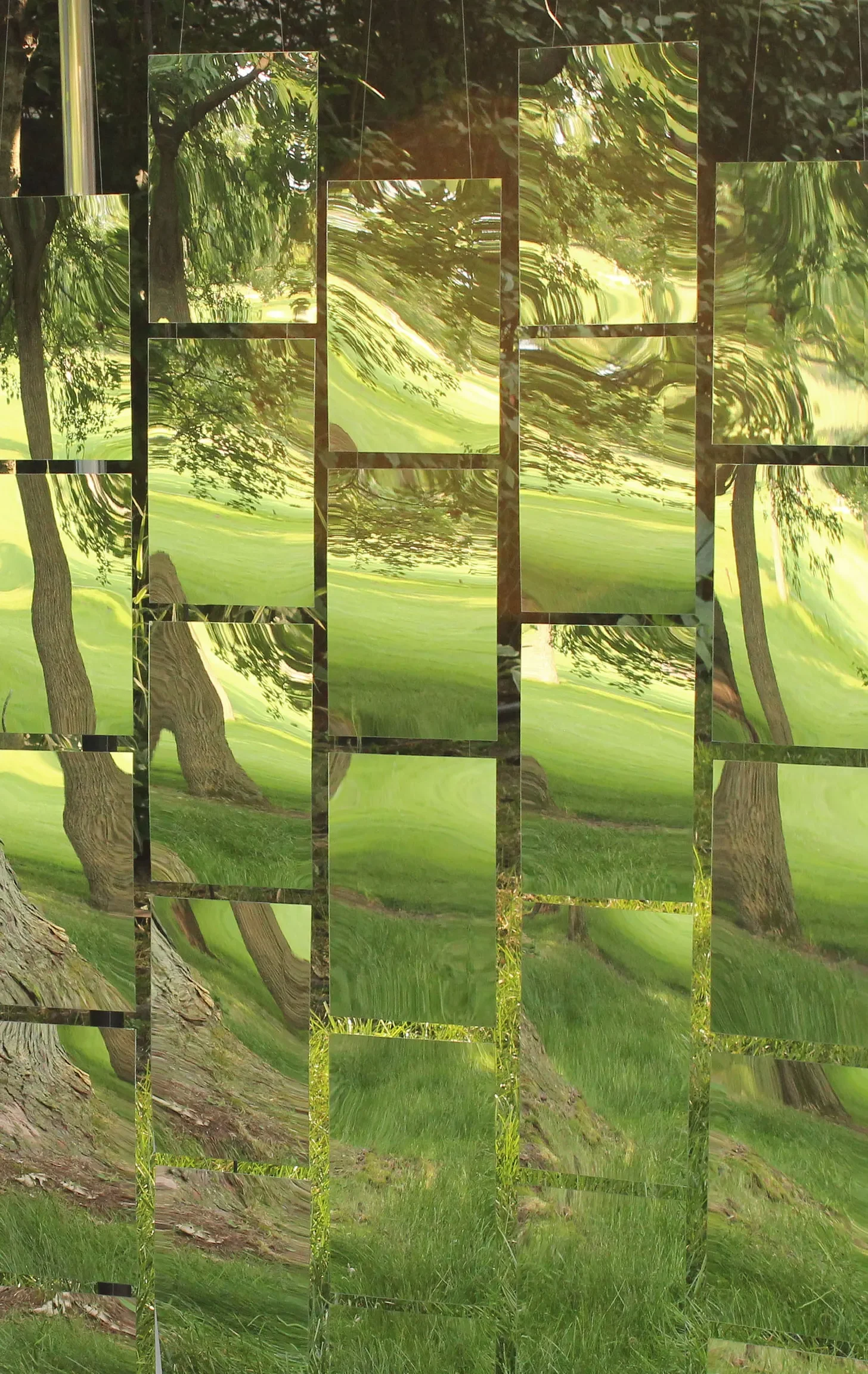
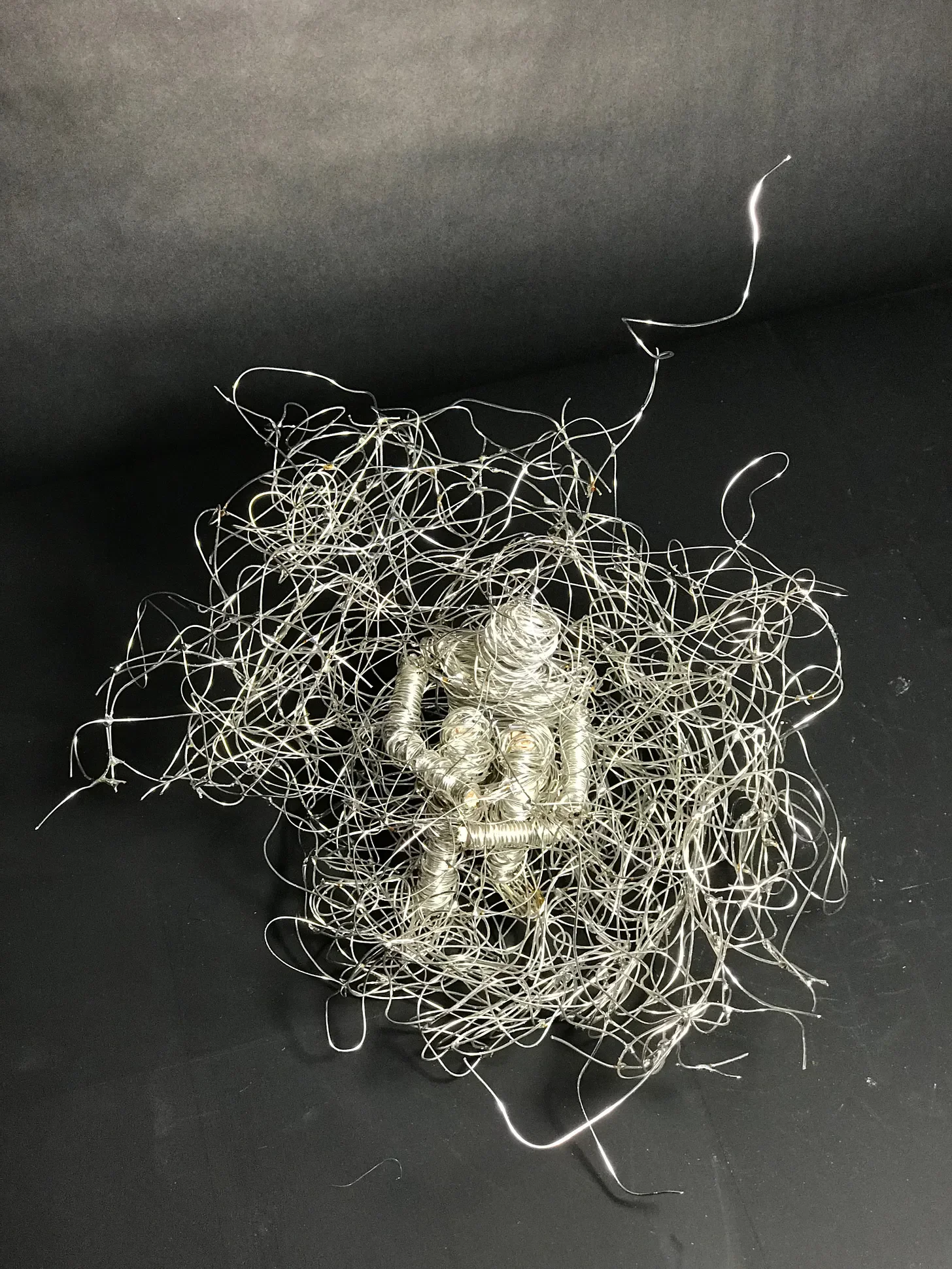
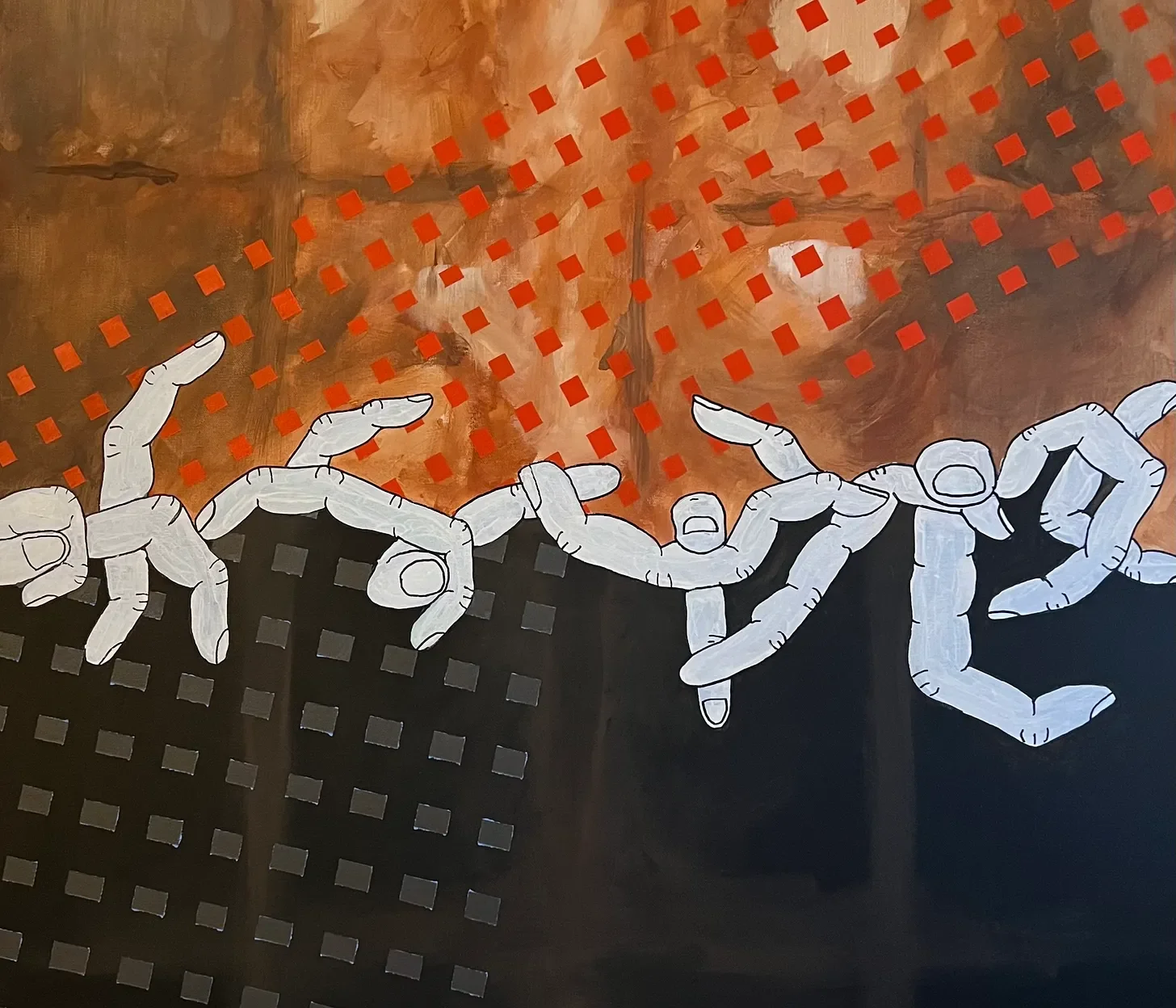
All the art featured in this post are by Kunal Sen.
Kunal Sen
The life changing impact of books.
Nearly five decades ago as a student in the city of Calcutta (Kolkata) India , Kunal wandered into the remainder section of a book fair containing “stray” books for sale and picked up a title called Design for a Brain (1952) which builds the case that the human mind is a machine.
The book inspired Kunal to switch from studying Physics to AI.
And while Kunal was doing his PhD in AI the same technologies that runs everything from ChatGPT and more were being developed.
Kunal today continues to be a prolific reader of books and publishes a review each quarter of all the books he has read for all of us to learn from.
And he is writing his second book, a novel following his memoir “Bondhu”.
Kunal Sen
Encyclopedia Britanica was a forerunner of challenges facing traditional media and the challenges of AI.
The Encyclopedia Brittanica was a pioneer in embracing technologies including creating the first CD-ROM products, going online, leveraging search and much more.
The big challenge was not leveraging the technology but as the format changed the economics of a highly trusted, deeply edited, print product which cost $1500 to $2000 collapsed because one could not charge the same for a CD-ROM especially when a product from Microsoft called Encarta was being given away for free.
A switch to free with a reliance on advertising was not sufficient because the market was not yet developed and the dot com bust occurred.
Eventually the free model was replaced with a hybrid model of subscription for all access and some highly ranked content available for free but monetized through search advertising.
In addition a pivot to educational organizations that needed access to trusted content and were willing to pay subscriptions combined, with the recent launch of highly intellectual free games funded by advertising helped address the financial problems.
When one thinks of all challenges magazine and print companies have faced on the Internet it is profound that if they had paid attention to Encyclopedia Brittanica’s learnings they would have saved a lot of heartache. They were early in understanding freemium models, monetizing games, the importance of recurring revenue and the importance of building different revenue streams long before others did.
Kunal Sen
Memory and Trust.
Now in the age of AI, the Encyclopedia is also grappling with how to leverage AI’s effectiveness in content production while retaining the trust and credibility of the brand which is based on human curation.
One of the tools that Encyclopedia Brittanica created was a tool for editors to write stories collaborating with AI. While there was efficiencies in the creation of the pieces the Editors found that fact checking and proof reading the AI took much more time than humans.
The editors trusted the machine output less than human output.
Humans have a much higher bar to tolerate mistakes from other humans than machines. An example is that today autonomous cars are much safer than humans but humans are far more skeptical about the abilities of the machines.
Another example of trust is the importance of a formal account of record.
Of trusted memory.
When the Encyclopedia stopped publishing a print edition the Library of Congress which had bought a new edition every 3 years for over 200 years ( not to replace the previous edition but to augment it), called Kunal with a concern.
The reason that the Library of Congress had bought each new print edition was that it allowed someone to check on the state of knowledge or culture over the decades by checking articles on the same subject across the years. A digital edition was not a static document changing in real time and even if a snapshot of all the content were taken once a year it would be difficult to capture the experience of navigating the content.
Today the past as it is digitized is disappearing and often cannot be accessed without the old hardware, browsers and plug ins. And when every single interaction is personalized and every AI conversation can provide different answers each time one asks what goes into the record?
What are the challenges when everything is impermanent and there is no shared memory?
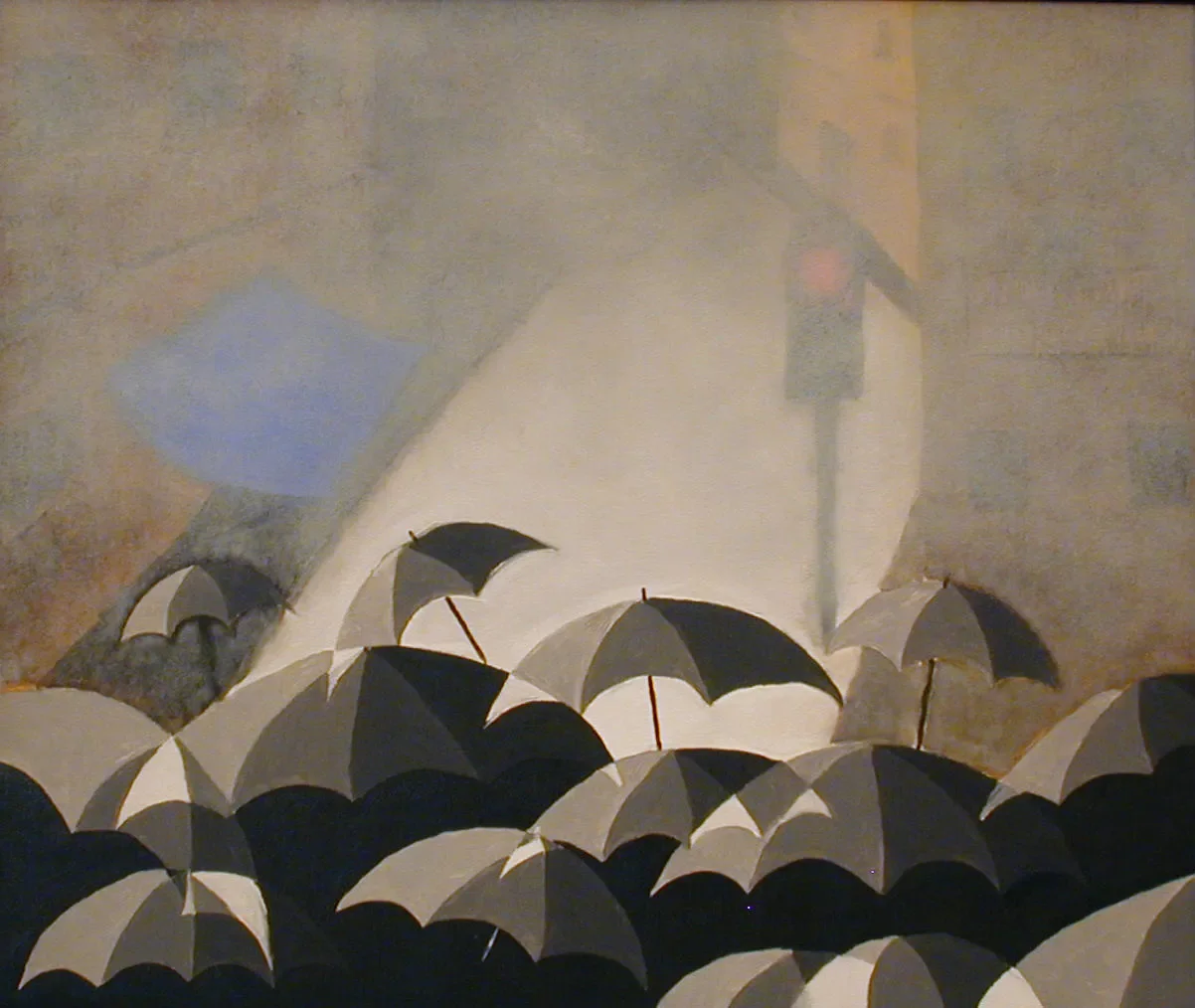
Kunal Sen
Art and Impermanence.
Given Kunal’s AI expertise and his sensibility as an artist one of the most fascinating parts of our conversation was about whether AI can be creative and make art.
Kunal believes that AI can be highly creative in that it can make things that are novel and useful. All humans are born creative but in time due to society and education most of us end up being less creative .
AI chatbots while trained have not been schooled. In addition they have a setting called temperature that allows one to dial up their randomness and rule breaking. Therefore it preserves its creativity.
AI can make moves that no human would have conceived of such as move 37 when it played AlphaGo with the then world champion, Lee Sedol.
After the game Lee said that he could not imagine any human making such a creative move.
On AI making Art however Kunal was skeptical since he believes true art has three attributes. 1) Creativity 2) Intentionality in that somebody had a reason to do something and 3) Shared Experience.
Machines can be creative but can they be intentional or is a human causing the intention? Even if machines had intention it is in the third attribute of shared experience that suggests machine generated creativity to fall short of being art.
Because when we see a work of art we soon begin to imagine what the artist may have been feeling or seeing when he or she created it. There is no such “he” or “she” in AI art and this psychologically impacts us the viewer.
Kunal also reminds us that most literature and art is grounded in the passing of time and the impermanence of life. Machines do not have to grapple with death. As Franz Kafka stated “the meaning of life is that it ends”.
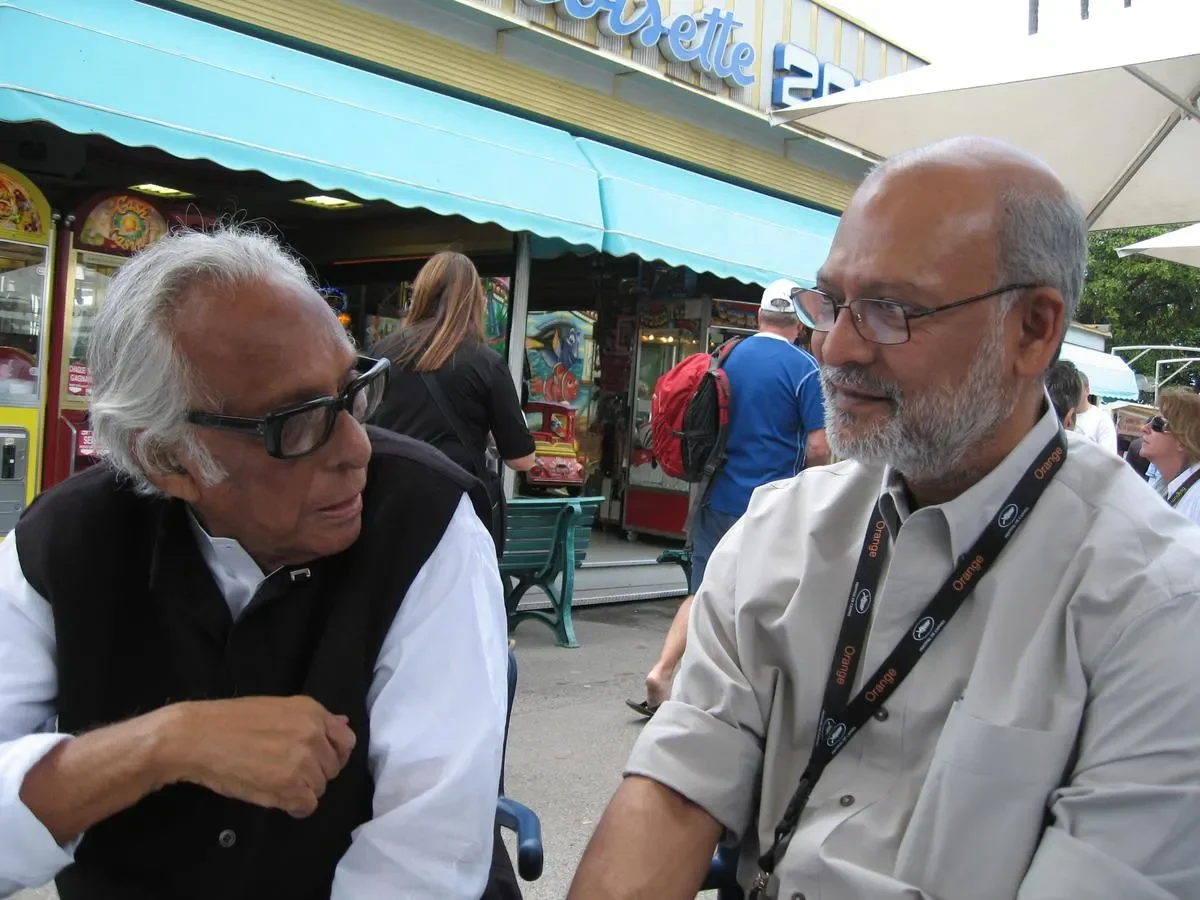
Kunal Sen with his father Mrinal Sen at the Cannes Film Festival in 2010.
The four points above are a small portion of an incredible conversation which will enlighten the listener about AI, Science, Art and the Human Experience in ways one would never expect.
More about Kunal Sen and his art here: https://www.kunalsen.com/
My conversation with Kunal is an episode called “Science, Art and AI in the Human experience” and is the latest What Next? episode on every global podcast platform.
Here it is on Spotify:
One Single Thing
https://www.poetryfoundation.org/poems
The greatest poetry in the world. All in one place. All free to access.
Here is one short poem:
The Red Wheelbarrow
so much depends
upon
a red wheel
barrow
glazed with rain
water
beside the white
chickens