If/Then
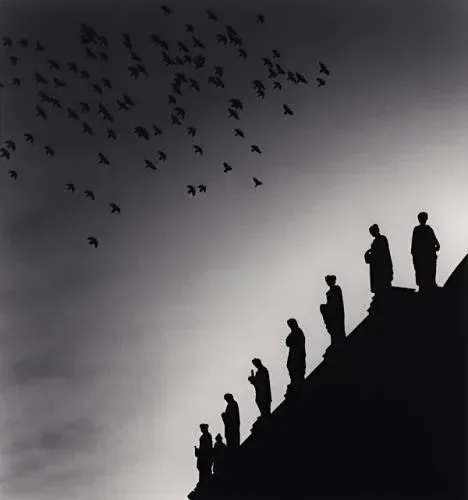
All we need is less?
If all we needed is less.
Then why would we pursue more?
All the frenzy of movement and meetings and much more remind one of William Wordsworth …
The world is too much with us; late and soon,
Getting and spending, we lay waste our powers
Among the best if not the single best book on wealth is Morgan Housel’s “Psychology of Wealth”. If you have not read it you are truly missing out on a combination of wealth and life wisdom written with such a fusion of intelligence, insight, illumination and inspiration that you are unlikely to look at money, finance and wealth in the same way ever again.
There are many many lessons and practical applications in the book but a key underlying message is simply one word.
Enough.
Here is one story:
“At a party given by a billionaire on Shelter Island, Kurt Vonnegut informs his pal, Joseph Heller, that their host, a hedge fund manager, had made more money in a single day than Heller had earned from his wildly popular novel Catch-22 over its whole history. Heller responds, “Yes, but I have something he will never have … enough.” Enough. I was stunned by the simple eloquence of that word—stunned for two reasons: first, because I have been given so much in my own life and, second, because Joseph Heller couldn’t have been more accurate. For a critical element of our society, including many of the wealthiest and most powerful among us, there seems to be no limit today on what enough entails.”
― Morgan Housel, The Psychology of Money
And if you need less or can make do with enough you may be able to pursue the dream rather than funding your a lifestyle or pursuing a number.
We should not allow ourselves to be priced out of our dreams.

The Importance of Speed.
If speed is indeed a competitive weapon and moving fast provides one an edge in hyper fluctuating and reacting markets.
Then why do companies not push for espresso action rather than have every decision lovingly percolated like at high tea or Japanese tea ceremony? Months pass between sending a Request for Proposal (RFP), receiving responses and an actual decision being made. Where more time and money is spent evaluating a decision than if the decision had been made and market reaction gauged, and a program adapted with real world data to determine its viability.

The Cost of Differentiated Inputs.
If there is abundant evidence that the difference in productivity and impact between an excellent talent and an average talent can be 10x in knowledge industries because AI provides amazing leverage. That many leaders understanding this justify significant multiples in compensation for their top talent versus that of the average worker.
Then why is then focus of many an organization is to zero base budget costs and find the lowest priced suppliers to whom they can pay the least in the slowest way possible way. This approach may impact who is placed on their business, the attention it gets and the quality of suppliers who might work with the firm.
Indeed , if one believes an hour of input is an hour of input one would also buy meat in volume since after all there is no difference in what part of the cow is purchased since the hoof should have the same quality as Kobe beef !
It’s the quality of the archer not the cost of the arrows that is the point of difference in an AI age.

The Importance of Time.
If one has 75 years of a physically healthy life. Someone in their mid-forties therefore has less than 10,000 days left and someone turning 60 is dwindling down to less than 5000.
Then why is time is taken for granted? By us or by others. When people ask for time for no or little compensation (earning, learning or joy of helping) they are advertising their disrespect while whispering sweet nothings!
When one delays, procrastinates, dithers, and lingers. Or accepts procrastination, dithering and lingering.
All we are losing and paying with is our life.
Walk away from those who suck the time of your life for paltry promises. Most will panic when you do!

The definition of Success.
If the definition of success is to have the freedom to spend time in the way that gives one joy? This joy is often accompanied by a sense of flow when deeply immersed in doing, a feeling of grace and serenity when feeling as one with all around and often excitement and ecstasy of pleasurable pursuits.
Then living in other people’s minds trying to ensure they think highly of us makes little sense.
As does focusing the plumbing and process of life and forgetting the poetry and passion.
Watching the scoreboard and losing track of the ball.
One Single Thing.
The power of HUMAN Story telling
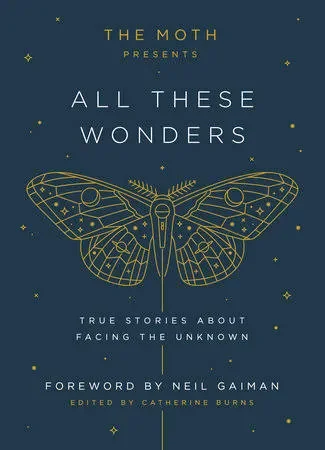
The Moth is a global storytelling nonprofit. Their mission is to inspire people to listen and share openly, think and feel deeply, and expand their understanding of one another.
Founded in 1997 by novelist George Dawes Green, The Moth was inspired by sultry evenings of storytelling in Green’s native Georgia– nights when moths were drawn to the porch light as friends gathered to share true stories. What began in George Plimoton’ds NYC living room quickly grew into a phenomenon, spreading to larger venues throughout the city.
Today, The Moth has presented more than 70,000 true stories — told live and without notes — across 11 countries and 4 continents, in grand theaters, cozy community spaces, prisons, hospitals, and even a graveyard. Through workshops for students, educators, adults, advocates, and professionals, it guided thousands of new storytellers each year in finding and crafting their own stories.
Live shows are at the heart of The Moth. With over 600 shows annually, ranging from open-mic StorySLAMS to curated Mainstage touring shows, they have featured stories by Salman Rushdie, Elizabeth Gilbert, Hanif Abdurraqib, Rachel Dratch, Padma Lakshmi, Mike Birbiglia, Brittney Cooper, Tig Notaro, an astronaut, a pickpocket, a voodoo priestess, a hotdog eating champion, and thousands more.
Most people first encounter the stories through the Peabody Award-winning show, The Moth Radio Hour, which airs on over 540 public radio stations nationwide, and The Moth Podcast, which is downloaded by tens of millions of listeners annually.
The Moth is also a publishing home for stories. They published five critically acclaimed books — four best-of anthologies and the New York Times bestseller How to Tell a Story — as well as a storytelling card deck, and most recently its first guided journal, My Life in Stories (Clarkson Potter, 2026).
Check it out.