Making Meetings Suck Less.
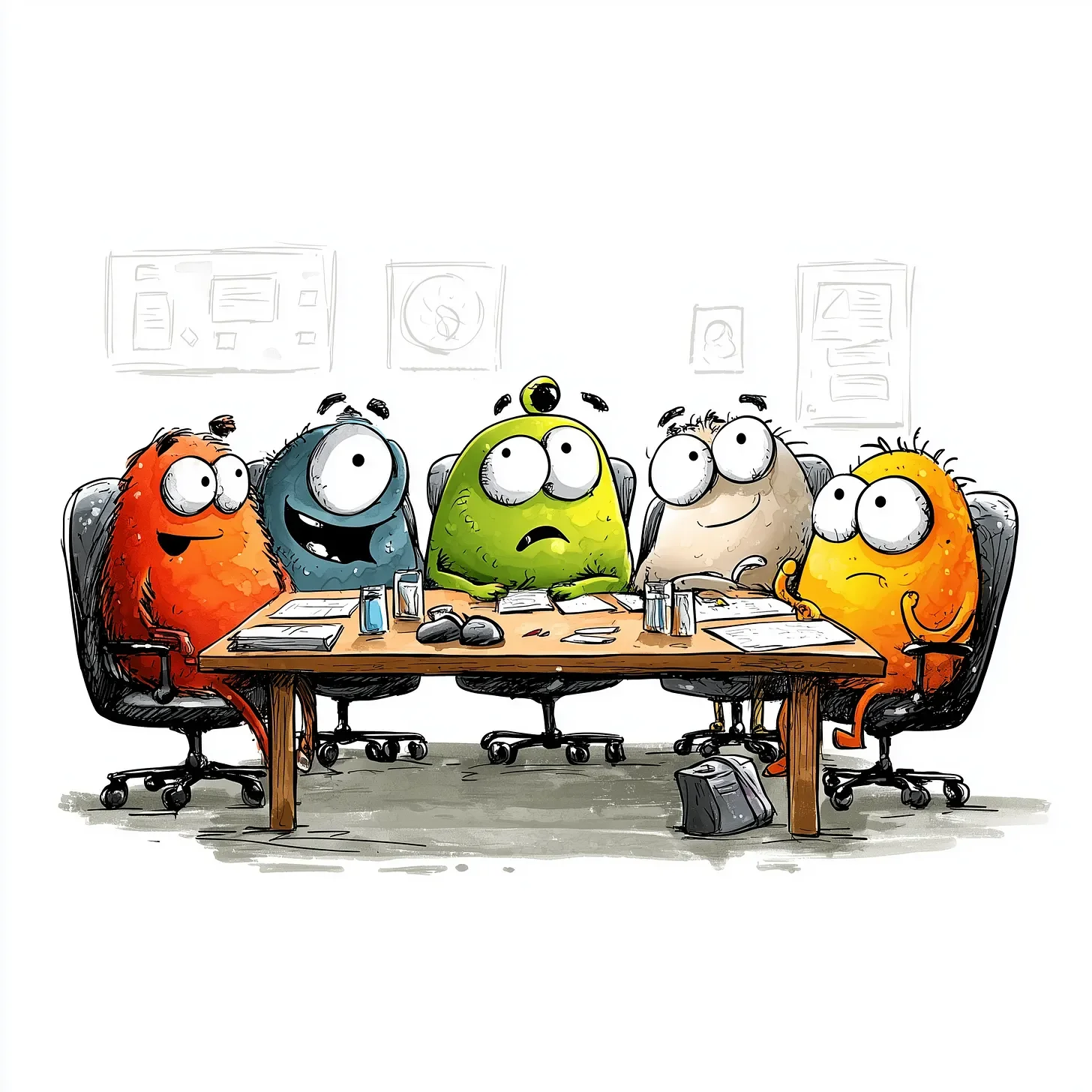
Image by Pixelbala via MidJourney
A majority of the time at work is spent in meetings.
Many are a waste of time.
In a recent episode of What Next?Rebecca Hinds discusses her book “ Your Best Meeting Ever”
We discussed when one should schedule a meeting, how best to run meetings and why AI is likely to create even more useless meetings.
1. Meetings are a result of “visibility bias”
In many companies (and this thinking animates the “return to the office” crusade of many mangers) what is visible is valuable.
Meetings become a status symbol that telegraphs that one is productive and important.
The knee jerk reaction of many of is to convene a meeting.
Often meeting are about “showing” productivity versus moving ahead.
2. Most of us are struggling with meeting debt.
Meetings are the most expensive form of collaboration sucking large swaths of time as they ooze in every direction of our calendars.
Like old legacy tech debt, many of us have to grapple with meeting debt.
Meetings that were put on the calendar and still occur long after they have outlived their utility.
We feel guilty to remove or eliminate these and so like barnacles they grow on the hull of the business.
3. “Meeting doomsday “is a key way of calendar cleansing.
“Meeting doomsday” is an exercise where individuals eliminate all meetings on their calendar and start with a blank sheet of paper.
Tobi Lutke at Shopify once asked his IT department to remove all meetings with more than two attendees across everyone’s calendars. Over the next year productivity increased by 25 percent.
4. Meeting Minimalism.
When meetings are added back to a calendar the key is to practice meeting minimalism :
Length: Can less time be scheduled?
Cadence: Can they occur less often?
Attendees: Does everyone who is invited really need to be there?
Agenda: Fewer items make for more productive time.
5. Meetings should only be scheduled if they pass through a 4D and a COE Lense.
Most meetings should really be an email, a memo or some form of asynchronous communication rather than gathering people into a real or virtual room .
4D: A meeting may be needed if one or more of the four interactions are called for:
Debate: There is significant disagreeement and one needs to debate alternatives.
Decide: A decision has to be finalized.
Discuss: A discussion of different perspectives is called for.
Develop: Feedback or other conversation to develop a person or an idea.
COE: Meetings may also be necessary in the following situations:
Complexity: When there is a great deal of ambiguity.
One-Way: The decision cannot easily be reversed or rescinded.
Emotion: The discussion or decision is likely to be emotional.
6. AI is likely to bring new levels of dysfunction.
Here are examples of absolute batty BS that is leaking into meetings:
Lots of “note taking” apps but few people: We have all attended meetings where note takers outnumber people. In addition to being disrespectful to the people who show up does the preponderance of notetakers imply that the entire meeting could have been a document?
Avatars instead of Humans: Even some CEO’s are sending their AI digital twins to answer questions. Imagine if the code hallucinates. We now have a “corrupt” CEO!
Flashy decks filled with foolish drivel: Now that AI can create awesome looking decks it is harder and harder to ascertain fact from fiction, or well thought out work from machine processed points.
Rebecca shares ways to overcome this AI tsunami and more.
Listen to the entire conversation to make your meetings suck less .
Available on all podcast platforms.
Spotify below:
One Single Thing.
Last month one of the greatest Indian photographers, Raghu Rai, died.
This is the beginning of his obituary from The Economist which contains many of his photos:
“It was hard to walk down a street with Raghu Rai. One friend estimated that, in a ten-minute trot to tea, he had stopped at least 100 times. He had seen what others did not see. A shadow on a wall that dramatized a woman passing, and the way her sari fell. Three sleeping dogs composing the centre of a terrace. Two commuters at a railway station standing stock still, reading their newspapers, while the crowd surged past them. Two old men walking in opposite directions, one a well-suited businessman, the other a bent, ragged beggar. This was seeing that did not miss an inch of space; seeing, or darshan, that recognized the connection between all things. Through his camera he met his god.”
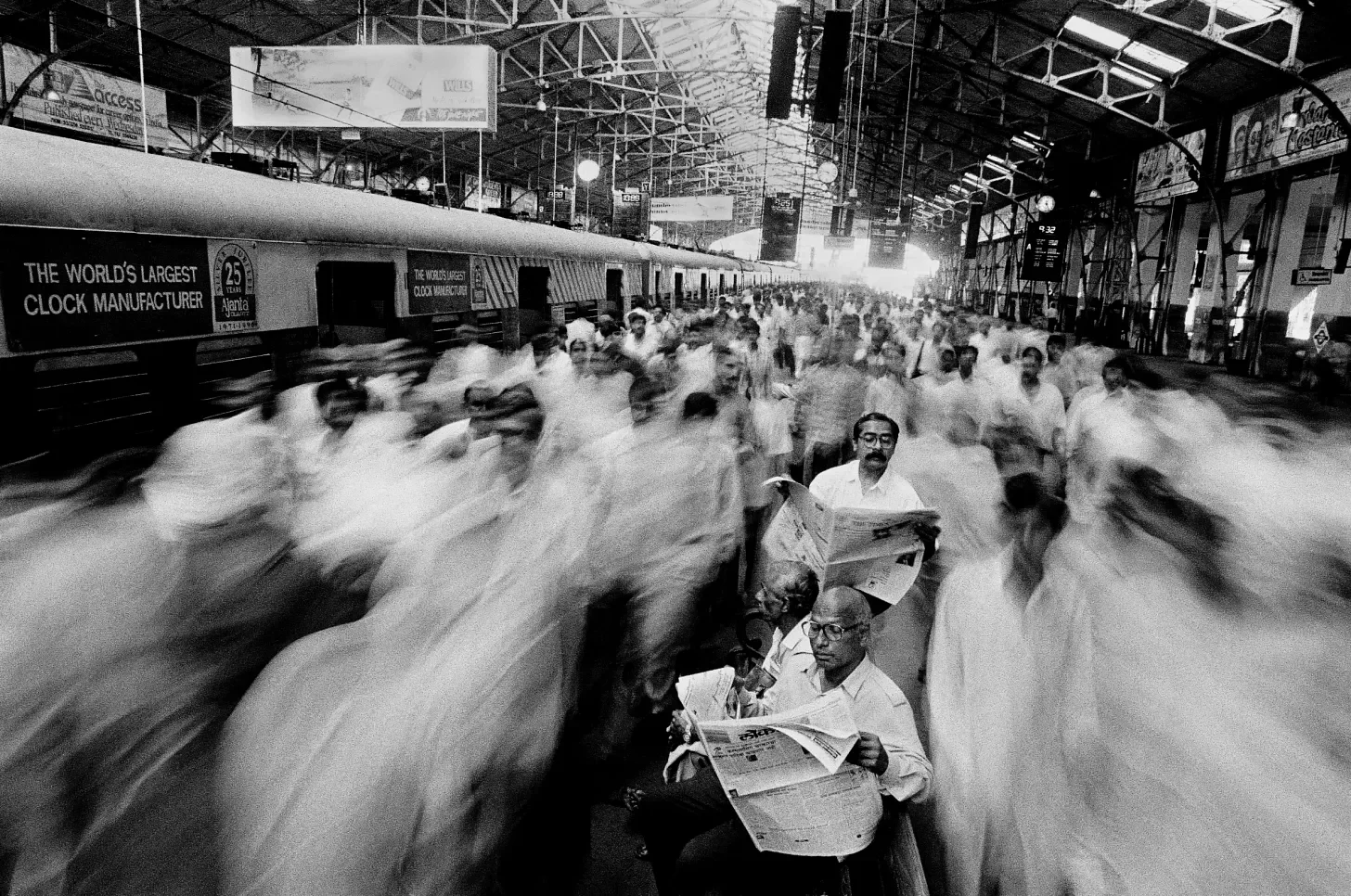
A photo taken at Church Gate Station Bombay (Mumbai)