Photo by Dennis Hocking
One of the keys to a good life and possibly success at work is kindness.
This includes not just being kind to other people but kind to oneself.
Often we spend our time regretting, self-flagellating, doubting our decisions and wondering if we can ever measure up especially in a world filled with standards and measures that are unattainable.
In today’s competitive marketplace of rapidly transforming landscapes and constant benchmarking we often forget that we are dealing not just with buyers, sellers, users, members, competitors, analysts, scientists, management and employees but with analog, carbon based, feeling filled people.
Humans.
Messy and Moody. Dream filled and desire driven.. Anxiously ambitious. Undulating with uncertainty.
Kindness is a way to connect in a world where connections are key.
But it not easy to model in an Excel spreadsheet, display in a PowerPoint , or be described with any depth by a LLM.
The machine will rapidly compute an answer, garland it with perspective, refine and correlate what has been fed into its innards, and then emit an output in a dazzling display of verbosity.
Answers that may awe us.
But rarely move us.
The author George Saunders gave a short (10 minutes) and remarkable speech on the importance of kindness which everyone should listen to:
A key theme is “to err in the direction of kindness”
Some key passages of his talk to students
“When young, we’re anxious — understandably — to find out if we’ve got what it takes. Can we succeed? Can we build a viable life for ourselves? But you — in particular you, of this generation — may have noticed a certain cyclical quality to ambition. You do well in high-school, in hopes of getting into a good college, so you can do well in the good college, in the hopes of getting a good job, so you can do well in the good job so you can . . .
And this is actually O.K. If we’re going to become kinder, that process has to include taking ourselves seriously — as doers, as accomplishers, as dreamers. We have to do that, to be our best selves.
Still, accomplishment is unreliable. “Succeeding,” whatever that might mean to you, is hard, and the need to do so constantly renews itself (success is like a mountain that keeps growing ahead of you as you hike it), and there’s the very real danger that “succeeding” will take up your whole life, while the big questions go untended.
Do all the other things, the ambitious things — travel, get rich, get famous, innovate, lead, fall in love, make and lose fortunes, swim naked in wild jungle rivers (after first having it tested for monkey poop) – but as you do, to the extent that you can, err in the direction of kindness.”

Photo by Dennis Hocking
Kindness to Oneself/ Self-Repair
“Everything that has a shape breaks”- Japanese Proverb
But…
“The world breaks everyone and afterward many are strong at the broken places”- Ernest Hemingway
And…
“Repair is the creative destruction of brokenness”—Elizabeth Spelman
A couple of paths( through words and objects) that inspire self-repair: Poetry and Kintsugi:

Photo by Dennis Hocking
Poetry.
Poems restores us to what is deepest in ourselves.
Poetry finds the perfect words in the perfect order.
CK Williams in his Pulitzer Prize winning collection “Repair” writes:
‘Self-doubt is almost our definition” as we move forward with the “hesitant music” of our lives
“If I can create myself, I’ll be able to amend myself.”
He celebrates “Invisible mending”.
The minds procedures of forgiveness and repair.
The greatest poetry is written at the borders of what can be said.
As this stanza on persevering and resurrecting and restoring oneself through the ups and downs of life while never losing your internal melody …
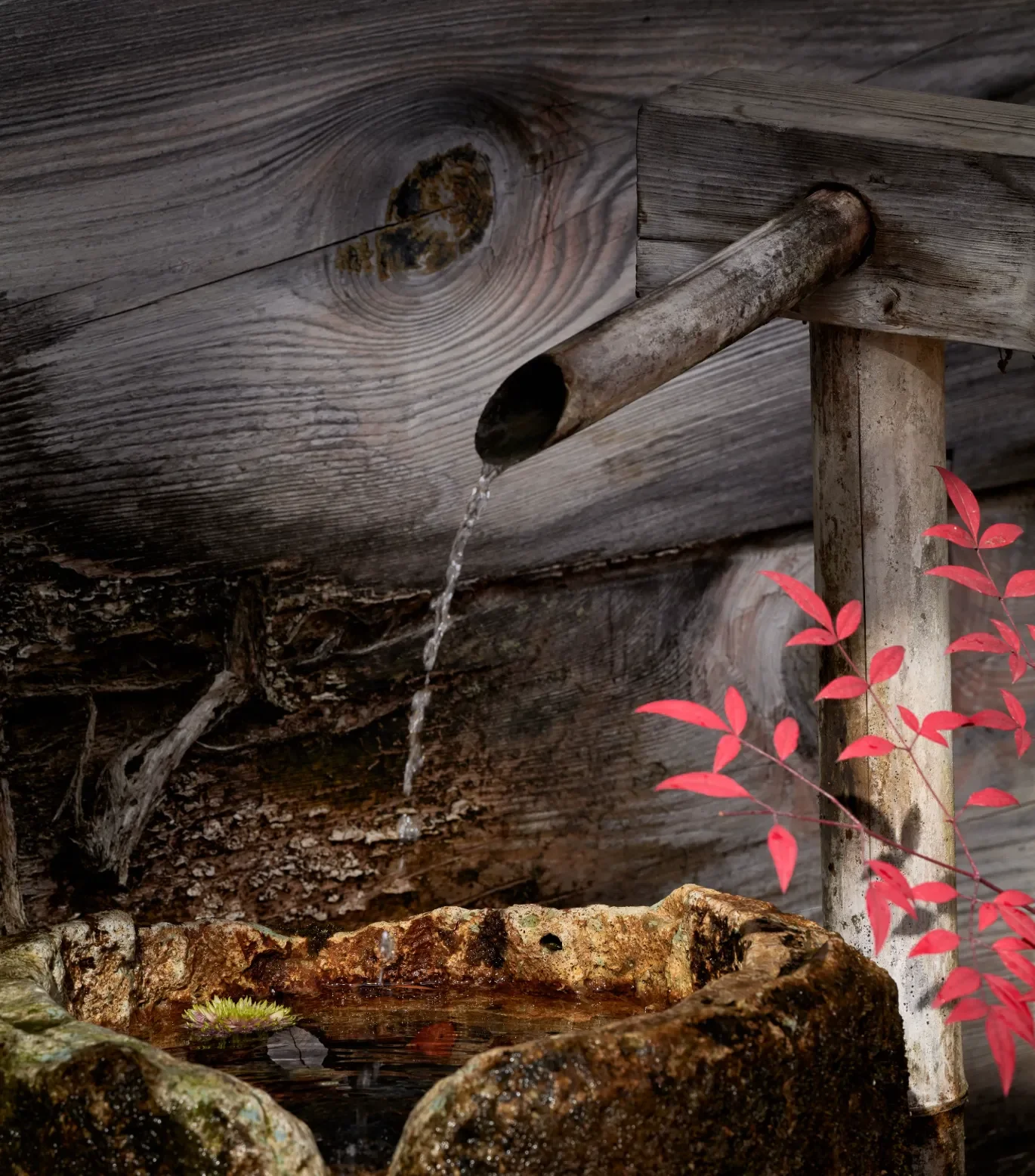
“Be soft in your practice. Think of the method as a fine silvery stream, not a raging waterfall. Follow the stream. Have faith in its course. It will go its own way, meandering here, trickling there. It will find the groves, the cracks, the crevices. Just follow it. Never let it out of your sight. It will take you”. Sheng-Yang
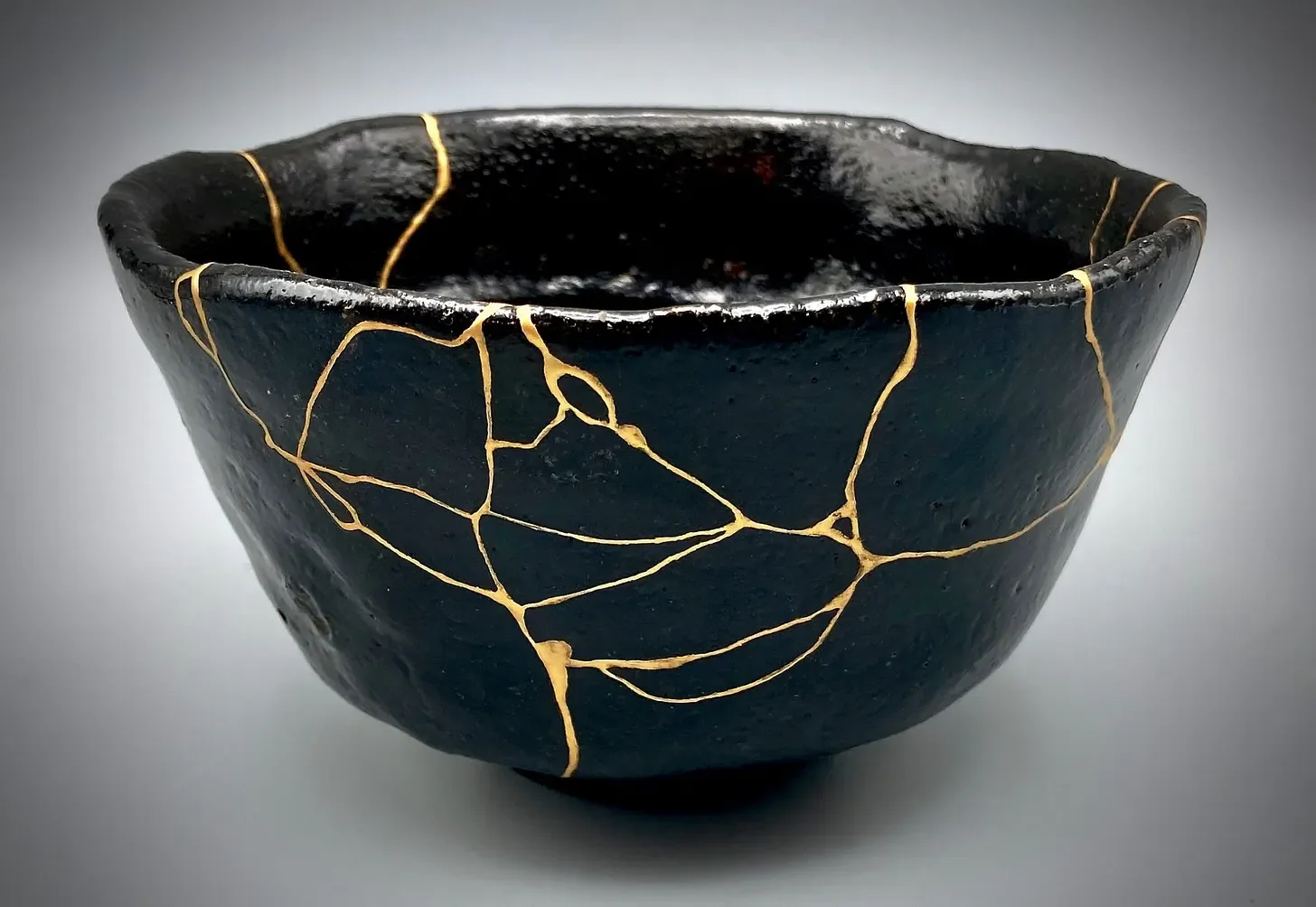
Photo by Dennis Hocking
Kintsugi
Kintsugi is a Japanese repair technique that takes ceramic destruction and makes a broken object into a new entity. It leaves clear bold visible lines with the appearance of solid gold. A kintsugi repair speaks of individuality and uniqueness, fortitude and resilience, and the beauty to be found in survival. Kintsugi leads us to a respectful acceptance of hardship and aging.
Kintsugi’s belief of beauty, knowledge and humanity arising from the scars and the repairs is sung by Leonard Cohen…
Ring the bells that can still ring
Forget your perfect offering
There is a crack, a crack in everything
That’s how the light gets in…
And the philosopher Rumi…
“The wound is the place where the light enters you”
Be kind. Self-repair.