A Book of Life.
Credit: Creative Commons
Earlier this week friend Thomas Stat (more on Tom at end of post) sent me a piece of writing which I am sharing here with his permission. Hope you find it as moving as I did:
A Book of Life.
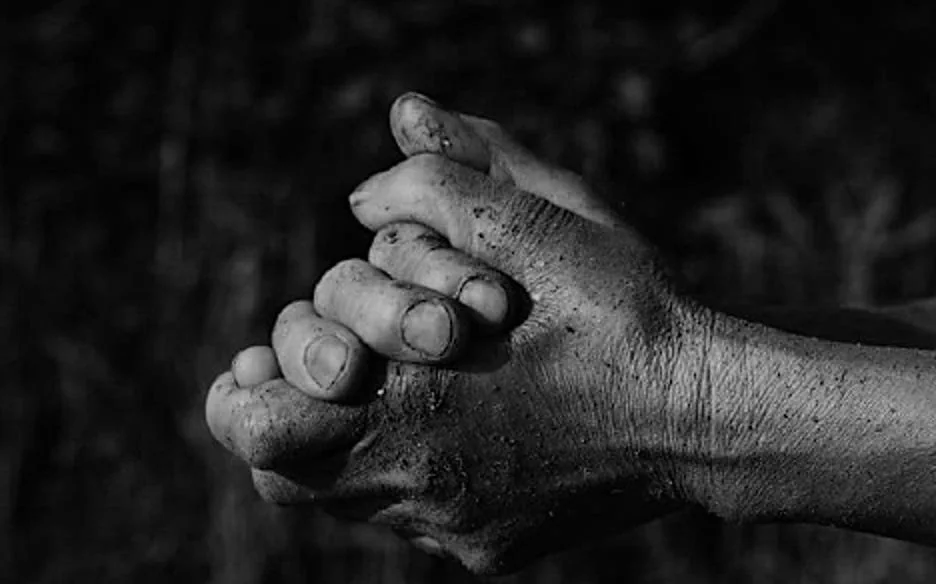
His were the well-worn hands of a farmer whose retirement was a 10-hour day in the fields rather than leisurely walks in the park with his grandchildren. Thickly calloused, muscled, and tan, these were hands that had baled wagon upon wagon of hay, birthed dozens of calves, and changed more than a few stubborn old tractor tires in the searing heat of the summer sun.
One hand gently, but firmly, clutched a pair of small leather address books. The other held a pen taken from an Iowa City Holiday Inn. The two books were identical in every way except for their age and condition. Both leather-bound, one was new and polished with the manufacturer’s band still holding it together, its pages yet to be exposed to daylight. The other was as worn and cracked as the farmer’s hands, much of the leather reduced to a powdery-orange, except for the binding, which was smooth and dark, polished with the oil of a thousand handlings.
My seatmate on that flight from Dallas to Chicago, a man visibly nearing 90, perched his hands prayer-like on the seat-back tray he had extended before take-off. He was poised to get to work with a clear mission in his eye, an obvious task at hand, and nothing but time between getting started and his goal. Only by accident did I catch his eye and gain a quick tip of his head and a subdued smile as he maintained his focus, staring straight ahead and waiting to start work.
There are still those people in their later years, who almost religiously refuse to abandon the analog world of handwritten address books for the modern affordances of a cloud-based contact file. I suppose there’s comfort to be found in tangible and tactile permanence. The physical relationship between names and pages instills a calming confidence that some computer virus, hacker, or hard drive crash is loathed to steal away. Ink and paper create a physical permanence in your connections and friendships.
Real relationships. Real paper. Real ink. Real people.
But now, having obviously run out of pages in the 60 or so years since he started entering his friends and family in this frayed and tattered book, it was clear this man was planning to launch a new chapter, a next chapter, not his last chapter. Despite his age, he planned to start, or in some way build on the past, an entirely new book of connections, of friendships, of life. The daunting task ahead was simply to transcribe every name, every address, and every telephone number from that old book to the new one.
Old friends were being given a new lease on life.
Despite the unfortunate constraints of occupying the middle seat next to me, he was well prepared and well supplied. It was a job the man was obviously looking forward to. His only interruptions were the flight attendant reminding him to raise his tray before take-off and his wife sitting next to him, deeply engrossed in needle point. I readied my laptop for some long overdue digital correspondence, planning to boot up my more modern connection to friends and family once we reached the proper altitude.
The familiar “ding” of the seat belt sign going off signaled we were now “free to move about the cabin,” a sound that was quickly followed by a cacophony of laptops booting up throughout the plane. I casually glanced over as my farmer seatmate lowered his seat tray again, carefully removed the label band from the new book, and gently opened his address book relic, being careful not to lose a page or further crack the binding. While most of the gold-gilded and alphabetical divider pages were flaked and dull, he easily found “A.” It was hard not to stare.
I could not look away. As far as I could tell, his friend, “Benjamin Alpers,” had moved at least 6 times. His street names, phone numbers, and the names of his three wives and 10 kids had been written over, crossed out, erased, and squeezed between lines in ink and pencil, almost to the point of illegibility. “Robert and Ruth Andrews” came next. They seemed to have settled down in Des Moines after a stint on an Air Force base somewhere in Guam. Every new entry, every scratched-out change and correction told a rich story that no computer or cell phone contact file system could ever hope to capture. Old entries were now so clouded by edits, erasures, and new entries that they were almost impossible to read. His task became even more daunting as he reached for the pen, opened the new book to itsproper place, and looked intently at the first two blank pages.
Through the rush of cabin air, endless clicking keyboards, and crying babies, I could hear my neighbor let out an impossibly long and disturbing sigh. He pushed the new book aside, slowly placed his pen on the seat tray, and leaned back as if readying himself to hear some bad news or read a Bible. I couldn’t stop staring at the drama unfolding next to me. I was mesmerized by his focus, his angst, and his challenge.
For over two hours, the man slowly read every name in his old book as if carefully sampling and relishing a vintage wine or playing an old family movie for the hundredth time. He paused to delve into every change and the detailed memories of every friend and family member he had honored and kept track of in his book of life. Not a page went by where the man didn’t come to a full stop, conjure up the life ofone of his friends and then, as slowly and respectfully as possible, gently draw a line though an entire name, sometimes redrawing the same line a dozen times with honor and grief. This was not merely an act of deletion, but a moment of true grief and mourning. Every page found the man deeply remembering a long-lost army buddy, a forgotten neighbor, the seed-corn dealer he once scared thewits out of with a well-outfitted scarecrow, or that distant relative who reliably kept in touch throughtheir impossibly tortuous annual Christmas letter.
When the pilot announced to prepare for landing, the man had made it up to “Joe Jackson.” He leaned over to ask his wife if she remembered or had heard anything from Joe. She whispered something softly and my seatmate reluctantly penned yet another line through Joe’s name and address. With pages and pages to go, my seat mate had yet to enter one name in his new leather book.
His face was pained with exhaustion, as if he’d attended a dozen funerals. As he raised his seat tray and stowed his pen away in an ink-stained shirt pocket, I could sense his frustration at not being able tofinish, let alone start what he had planned to accomplish on our flight.
I looked at this man and felt sorry for him at first. So many friends, so few left, so little time. My sorrow quickly turned to delight when I realized how blessed he’d been to have so many names in his book of life and all the rich stories behind every single entry.
As seatmates often do at the end of a flight, as we gathered up our belongings and crowded the aisle, the man stretched out his leathered hand to me and, with one of the warmest smiles and warmest handshake imaginable, looked me straight in the eye and said, “my name’s Weston Briggs, young man. What’s yours?”
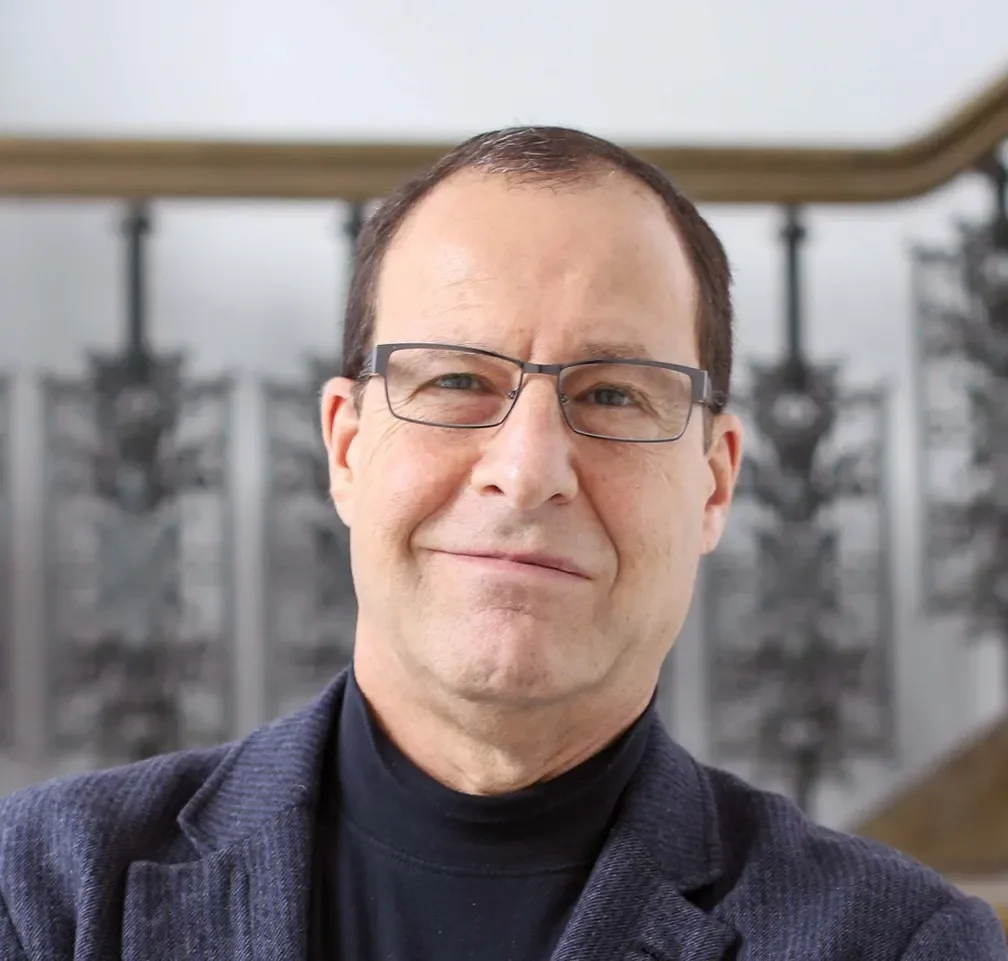
About Thomas Stat
Tom is an innovation strategist and experience designer with a background in aerospace engineering, behavioral science, architecture, fine arts, and business. After his leadership roles in architecture industry, Tom co-led the Chicago office of IDEO, one of the world’s premier innovation consultancies. Throughout his career, he has contributed to the conception and development of new-to-the-world products, services, environments, and experiences in a wide range of industries including technology, healthcare, education, food and beverage, transportation, pharmaceuticals, telecommunications, financial services, consumer packaged goods, hospitality, consumer electronics, real estate, and the performing arts. He holds 11 U.S. patents.
Tom actively collaborates with clients through his independent consulting company, 11 Consulting Group and is an adjunct professor at Vanderbilt’s Owen Graduate School of Management, where he teaches a class in “Innovation Strategy” focused on the power of empathy, curiosity, optimism, courage, and persistence in making the world a better place.
He is an investor and advisor to a novel news app called “Beacon,” is curating a book of photography called “Looking,” actively journals his observation of people, writes fictional news articles depicting alternative futures, is in the early concept stage of “Goddard” a movie focused on the father of the space age, and is contemplating a book on what he believes to be the world’s principal problem - zero-sum game thinking.