
On Time.

Bad Weather by Martin Parr
As the year ends we are all poorer in time but ideally richer in learning and experiences.
Some quotes on time to understand what may have happened in the past and help prepare one to best seize the future…
Time is the essential asset.
“The meaning of life is that it stops”. Franz Kafka
“How we spend our days is, of course, how we spend our lives” Anne Dillard.
“Tell me, what is it you plan to do with your one wild and precious life?” Mary Oliver
Time and Careers.
“Persistence isn’t just continuing to try—it’s the runway that gives your talent time to take off.” Shane Parish and Barry Demp
“Short-term results come from intensity. Long-term results come from consistency.” John Maxwell
“ I fill the cracks in the road to success made by forces beyond myself” Viviana Andazola Marquez’s
“If everything you do needs to work on a three-year time horizon, then you’re competing against a lot of people, but if you’re willing to invest on a seven-year time horizon, you’re now competing against a fraction of those people, because very few companies are willing to do that. Just lengthening the time horizon, you can engage in endeavors that you could never otherwise pursue. At Amazon we like things to work in five to seven years. We’re willing to plant seeds, let them grow—and we’re very stubborn. We say we’re stubborn on vision and flexible on details” Jeff Bezos
Time and Aging.
On getting older..
“His face was like a mirror, and it was better not to look” L Annette Blinder
“Only a couple of years had passed in fact. But he looks considerably hammered at by the interval” Anon
“His face was fuller, his center of gravity lower” Anton Chekov
“My guillotine is time” Trevor Moore
Time and Loss.
“Life changes fast. Life changes in the instant. You sit down to dinner and life as you know it ends, A single person is missing for you, and the whole world is empty.” Joan Didion
We will lose everything we love in the end. But why should that matter so much? By definition, we do not live in the end: we live all along the way. The smitten lovers who marvel every day at the miracle of having met each other are right; it is finding that is astonishing. You meet a stranger passing through your town and know within days you will marry her. You lose your job at fifty-five and shock yourself by finding a new calling ten years later. You have a thought and find the words. You face a crisis and find your courage.” Kathryn Schultz
Time and Impermanence.
“We are imperfect mortal beings, aware of that mortality even as we push it away, failed by our very complication, so wired that when we mourn our losses we also mourn, for better or for worse, ourselves. As we were. As we are no longer. As we will one day not be at all” Joan Didion
“All of this is made more precious, not less, by its impermanence. No matter what goes missing, the wallet or the father, the lessons are the same. Disappearance reminds us to notice, transience to cherish, fragility to defend. Loss is a kind of external conscience, urging us to make better use of our finite days. As Whitman knew, our brief crossing is best spent attending to all that we see: honoring what we find noble, denouncing what we cannot abide, recognizing that we are inseparably connected to all of it, including what is not yet upon us, including what is already gone. We are here to keep watch, not to keep.” Kathryn Schultz
Time and Change.
“I felt myself twisted into a new more complex shape.” Derek Raymond.
“No one who lives long enough can be surprised to find their biography has been molded by distant events, by other people’s wills, with little or no participation from our own decisions. Those long processes that end up running into our life — sometimes to give it the shove it needed, sometimes to blow to smithereens our most splendid plans — tend to be hidden like subterranean currents, like tiny shifts of tectonic plates, and when the earthquake finally comes we invoke the words we’ve learned to calm ourselves, accident, fluke and sometimes fate.” Juan Gabriel Vásquez's
“I have walked through many lives,
some of them my own,
And I am not who I was,
though some principle of being
abides.
Though I lack the art
to decipher it,
no doubt the next chapter
in my book of transformations
is already written.
I am not done with my changes.” Stanley Kunitz
On Making the Most of Time.
“The business of life is the acquisition of memories. That is all there is.” Carson from Downton Abbey
“I’m not telling you to make the world better, because I don’t think that progress is necessarily part of the package. I’m just telling you to live in it. Not just to endure it, not just to suffer it, not just to pass through it, but to live in it. To look at it. To try to get the picture. To live recklessly. To take chances. To make your own work and take pride in it. To seize the moment. And if you ask me why you should bother to do that, I could tell you that the grave’s a fine and private place, but none I think do there embrace. Nor do they sing there, or write, or argue, or see the tidal bore on the Amazon, or touch their children. And that’s what there is to do and get it while you can and good luck at it.” Joan Didion
Happy New Year!
Career Architecting.
These days I find myself spending a lot of time providing guidance to seasoned and accomplished leaders across industries and around the world as they grapple with their future. Other times parents ask how their grown children who are early in their careers can ensure success in these tectonic times.
While each conversation is different and customized to the specific person and situation, there is one framework and approach that I believe everyone might find useful regardless of where they are in their career journey.
It is one I have used for decades and it works whether you work in a small company, a large company or for oneself.
It involves five steps.
Step one: The Nine Word Exercise.
To start we must understand who we are and what we are currently good at, or would like to be known for in the future.
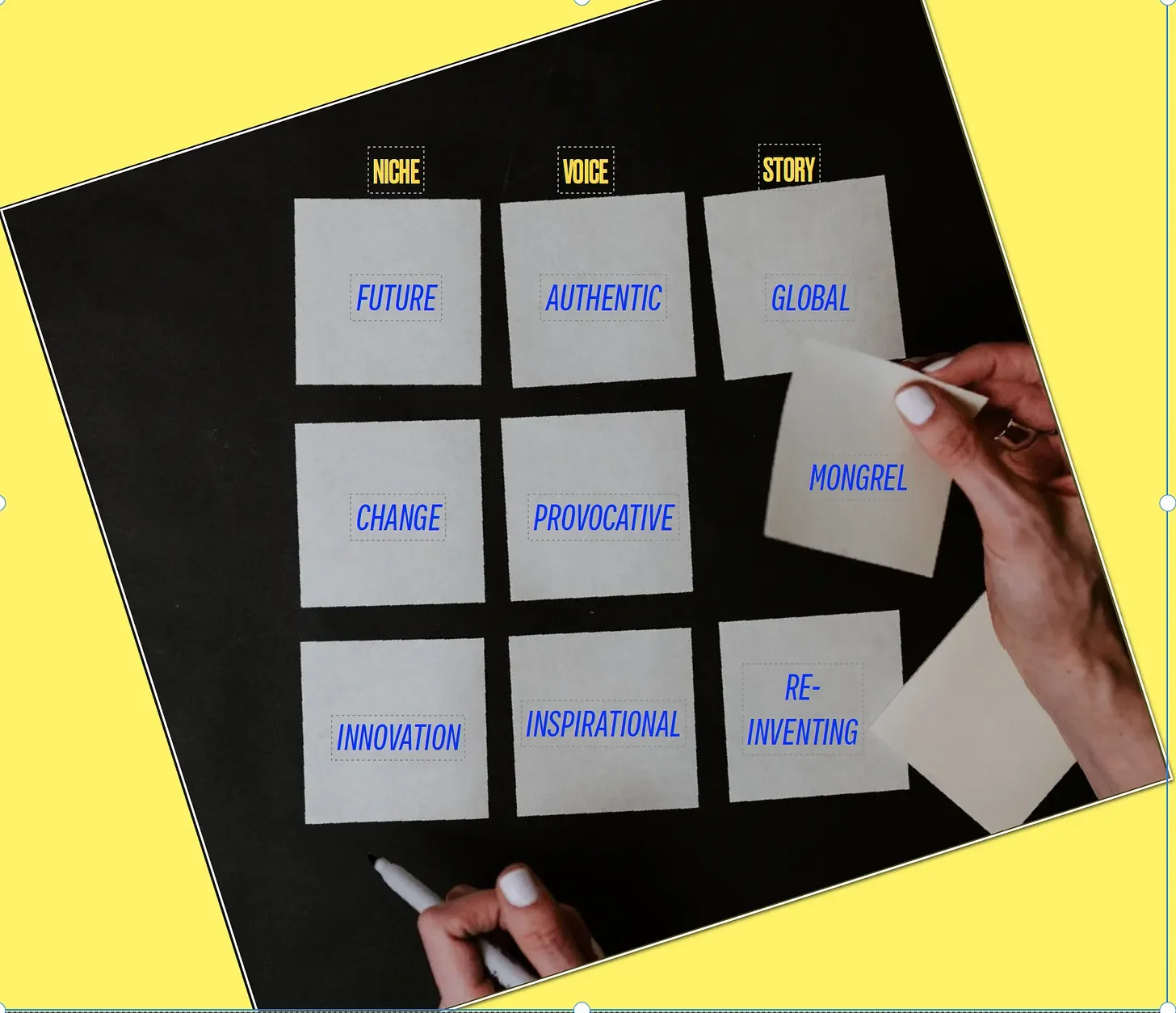
One way to do this is the 9 word exercise.
Do this exercise both by yourself and get people who know you well to share their input.
Niche: Find three words that best describe what you believe you are very good at. In my case the words are future, change and innovation.
Voice: People do not follow skills or titles but they follow people. So who are you and what is your voice? This is something we often need to ask other people for their perspectives because it is hard to hear ones own voice. In my case I have been told my voice is authentic, inspirational and provocative.
Story: Three words that define your story. Why should people believe you? What makes you who you are? In my case I am global, a mongrel ( have done multiple things across a career) and reinventing (starting new firms, pioneering new initiatives, and six and half years ago becoming a Company of One.)
One or a combination of these words will help you unearth your core expertise.
Expertise is what people will look for rather than knowledge or even experience both of whose value is plummeting in an AI Age.
My core expertise : Reinvention
Helping people see, think and feel differently about how to grow themselves, their teams and their business through reinvention.
Try the nine word exercise. For over two decades it has worked for almost everyone who has asked for advice.
Steps two and step three: Reframe Expertise and Develop Credibility/Reputation
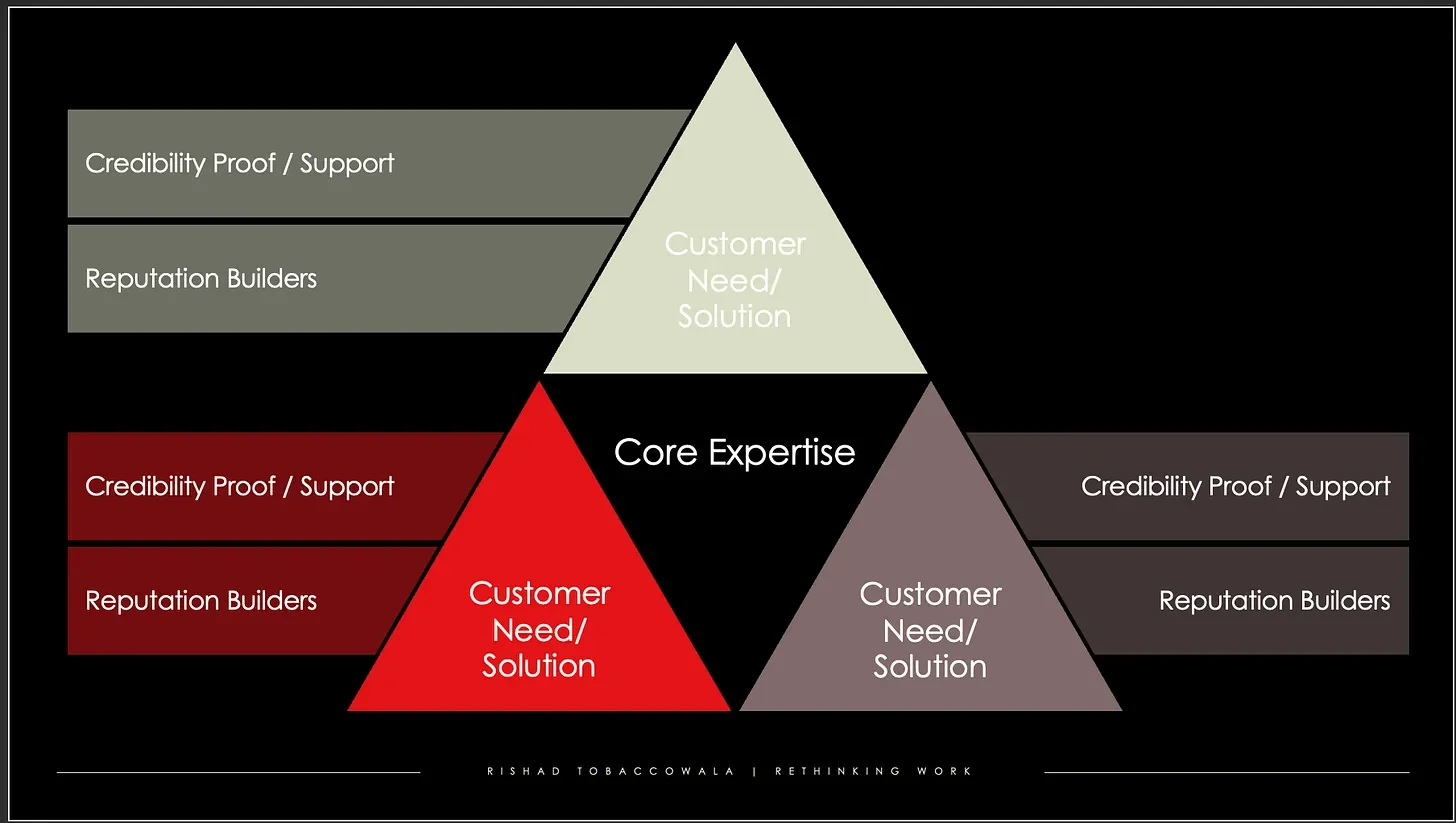
Once you have a core expertise it is important to reframe the expertise in ways that specifically address or solve customer needs. Ideally consider 3 ways you can express your expertise to meet market needs.
Once have translated your expertise to delivering on customer needs or providing solutions start listing or finding ways to ensure credibility as well as build a reputation that can attract and prove to buyers that you can solve their issues and challenges.
This model worked when I worked for a 100,000 plus person company and below is how I have successfully applied it to my second career of working as a company of one.
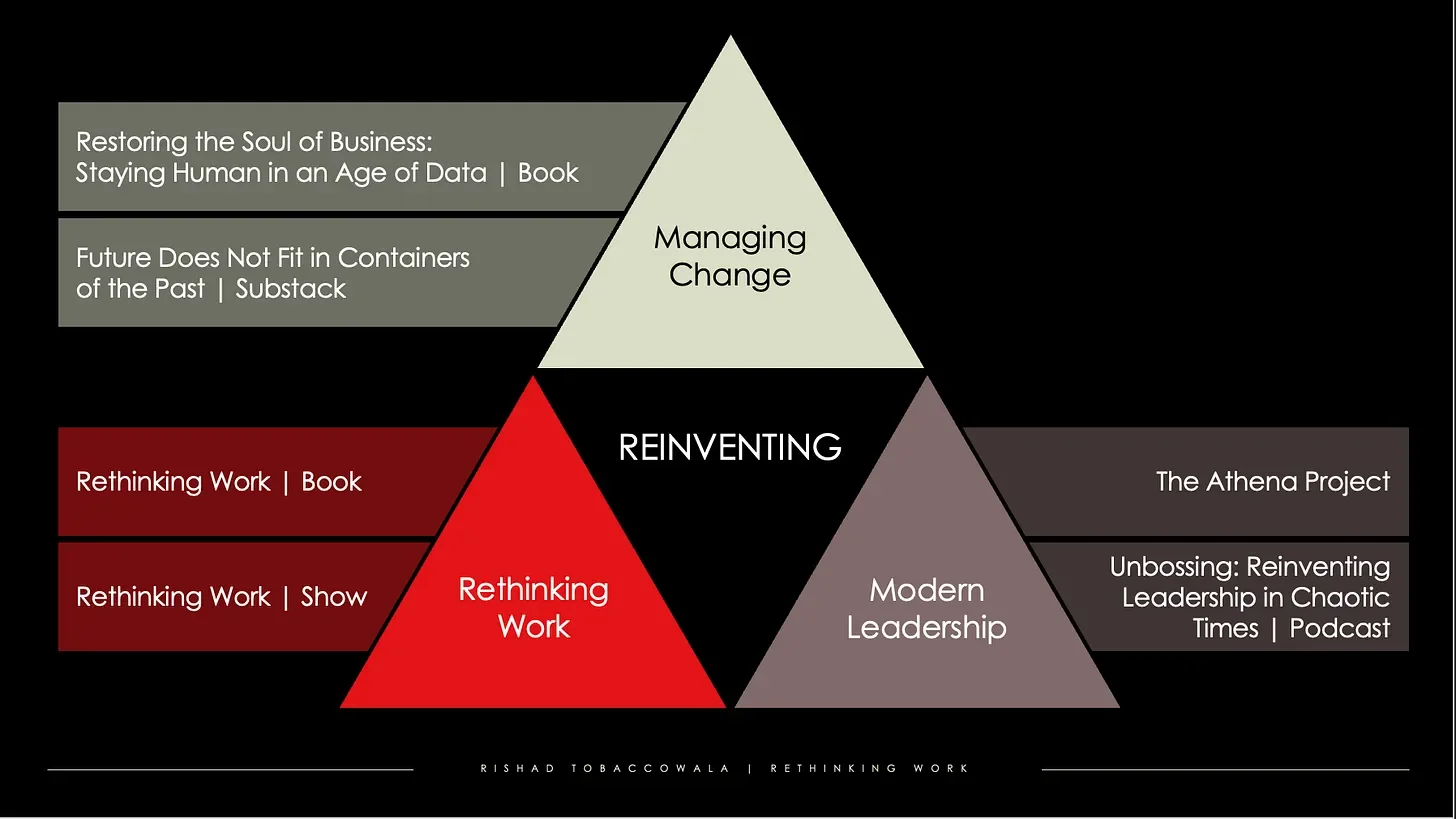
While Reinventing is my core expertise I have reframed it in ways that address specific challenges and opportunities that companies and leaders are grappling with:
a) Managing Change: Companies do not change. People do. How to ensure people change when change is really difficult? Change is much more than strategy, M&A, and re-organization. It includes growing employees future hopes and dreams and not only on growing the company, as well as incentivizing correctly and making significant investments in learning and retraining.
b) Rethinking Work: Companies need to get work done. Yesterday’s models centered primarily on offices, full-time jobs and many types of old scale are all in rapid decline due to a number of seismic shifts including generational ruptures, AI, the rise of gig work and much more. How should a company or a firm look for an AI First/Talent Anywhere Age while preserving quality, culture and competitive advantages?
c) Modern Leadership: Leadership will be key in the future but how does one lead in a world of five types of talent including Agentic Talent, a world where zones of control are being replaced by zones of influence, and where knowledge is free and much of past experience needs to be unlearnt? How does manage a multi-decade career where full time jobs get harder to retain as one grows more seasoned?
Expressing expertise in ways that solve and address a company or a customers problems is a key step but as important is proof and validation that one has the expertise and reputation to do so.
This requires one to constantly learn new skills to maintain credibility and update ones reputation.
In my case I have not rested on the laurels of distinguished multi-decade full time global career but anticipated and reinvented for the future over the past six plus years operating as a company of one to scale and deliver proof through books, substacks, podcasts, shows, and leadership projects (The Athena Project which combine events and community and content).
This ensures that companies and customers a) have constant proof of relevancy of services, b) see continuous iteration and honing of expertise and c) allows for expanding ones networks that provide new learning, perspectives and opportunities.
All of these work in synergy to unleash a flywheel. This way my one to many (content), one to some ( speaking) and one to one( advisory) monetization of my expertise feed off each other just as the skills of helping firms with rethinking work, managing change and/or modern leadership resonate and build of each other.

Step 4: Generous Partnering
A career can be long lasting if one has a vibrant and widespread network.
The best way to build such as network is to be generous.
To aggressively help others. To be there when people need guidance. To do favors. To look beyond the economics and the day to day transaction. To build good will.
This allows one to grow because it attracts people who want to work with you or bring you ideas or give you the opportunity to help them and their firms.
While I might ostensibly operate today as a company of one, any success I have is primarily due to all the people who help me constantly. This includes amazing companies like my multi-decade employer Publicis Groupe with whom I still remain connected, albeit in a small way, or more recent partners such as BCG or University of Chicago or SAP who help build out The Athena Project or teams at HarperCollins who have published and support my writing career, or Private Equity Companies like who place me on their company boards. The list goes on and on.
In a fast moving world its not just APIs ( Application Programming Interface) or MCP’s ( Model Context Protocols) that matter but HHG ( Human to Human Generosity) that makes wonderful things happen.
Step 5: Maximize Revenue Streams while Minimizing Costs.
Today when people find themselves stuck and frozen in place a key reason is financial.
We cannot afford to walk away from our firms given our needs for health care and income. Or we have a cost structure that requires us to cling to a job we do not like.
The solution for these very real problems requires time to find ways to reduce ones cost structure while finding new opportunities or additional ways of making income ( free lancing, side gigs, teaching, getting on boards). The idea is to reduce costs, build a few months of living expenses and some small new ways of income.
This allows one to either take a risk or be prepared for a “right-sizing".
The key is to remember that a career is 50 years long.
If one wants to reboot and reinvent one can do it gradually over 2 to 5 years by 1) identifying a core expertise 2) translating how that expertise can be expressed in ways that deliver solutions to companies 3) building credibility and reputation 4) being generous and 5) finding ways to maximizing revenue streams while minimizing costs.
These five steps will work even if you wish to spend decades at a company as I did. This is because the reasons a company keeps you is for expertise, for solving client problems, for keeping on top of your game and using your reputation to help the firm, and to work generously and collaboratively with everyone while maximizing revenue and minimizing costs.
This approach just makes sure that one has options in a changing world.
It allows you to stay for decades in a career because you have options and it allows one to navigate the shocks of the modern market place where we may need to go before we want to.
Along with relationships and health, meaningful and rewarding work are keys to contentment and growth.
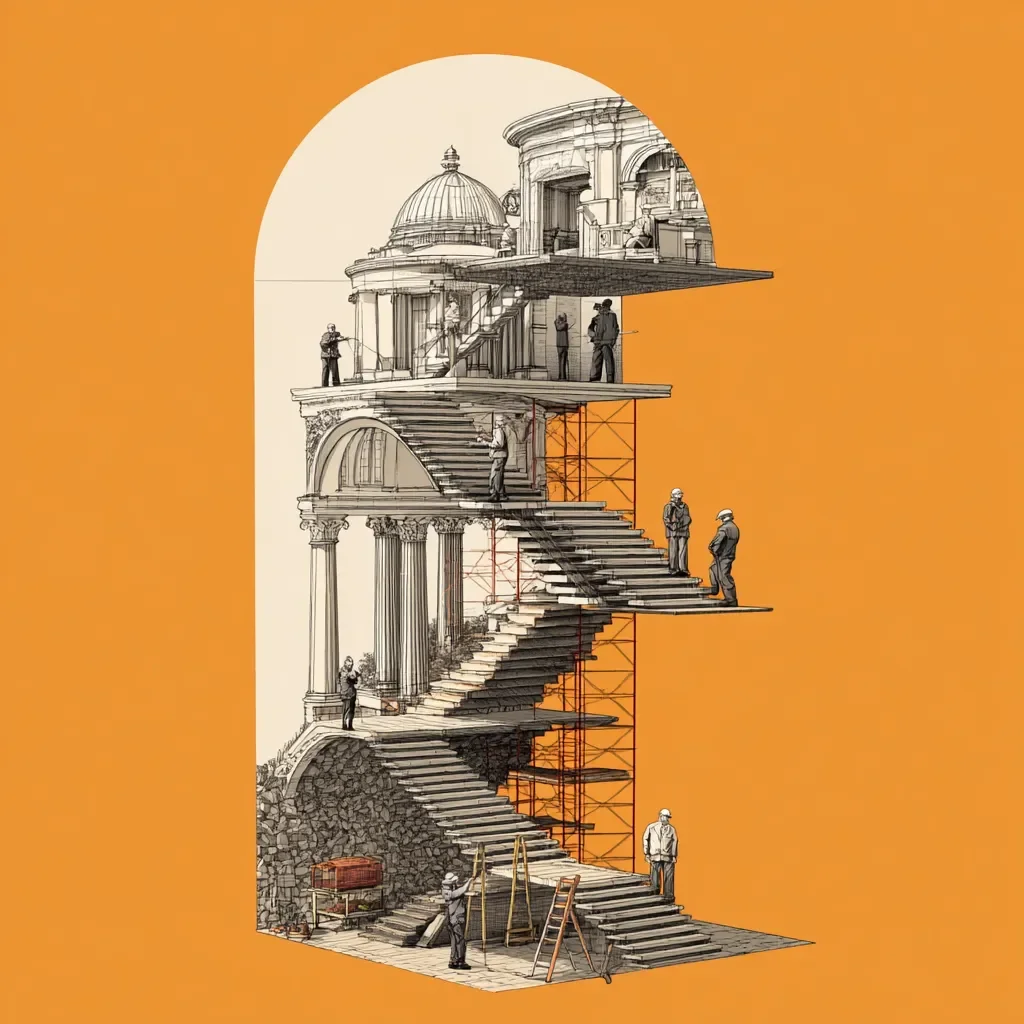
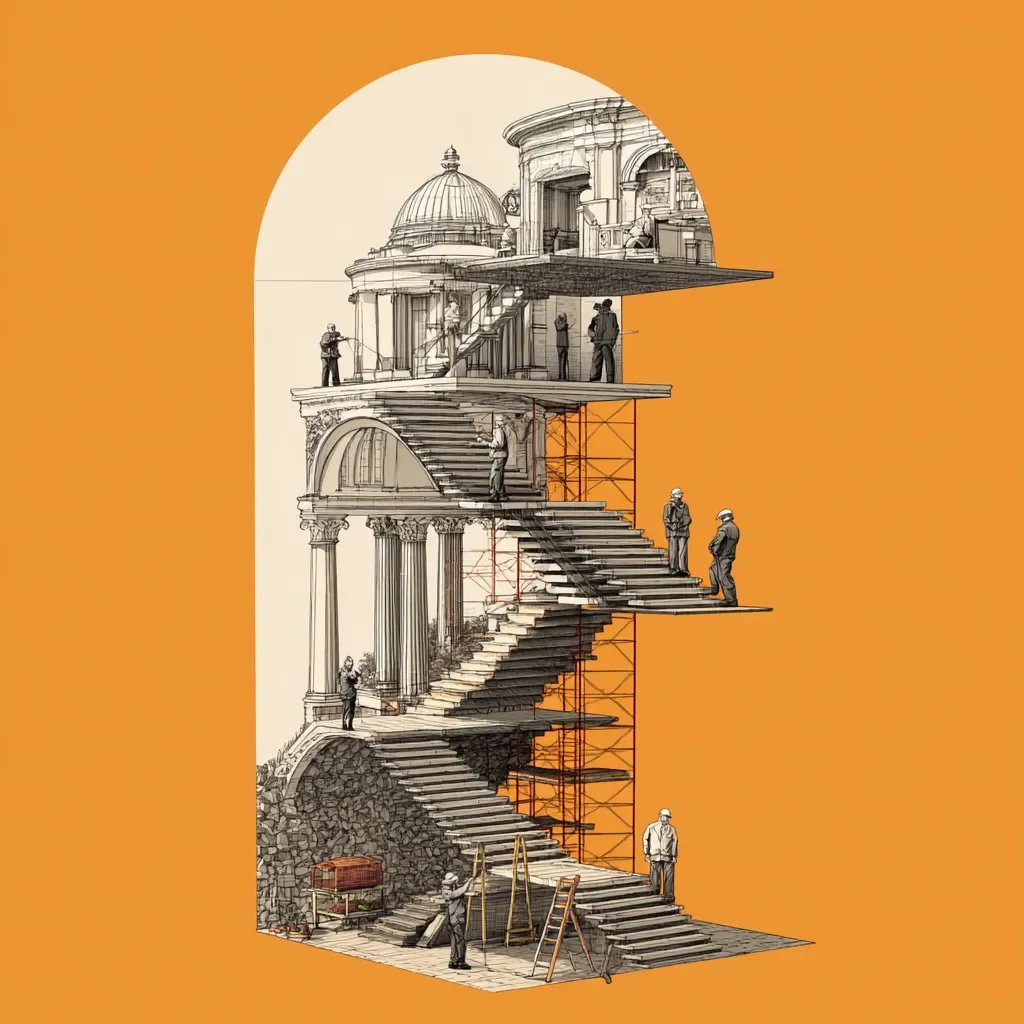
We are not just working at a job which is like working on a a slab of marble but rather we are architecting a cathedral which is our career, our craft and our work.
So let us look up and beyond…
Career Architect!
Pioneering the Future of Work.
Images by MidJourney to the prompt “Pioneering the Future of Work”
Six months ago to accompany the best selling book Rethinking Work, we launched The Rethinking Work Show to gain and share insights and learnings from a spectrum of individuals across generations and industries from all over the world who are pioneering new ways of working.
Twenty one episodes later, three major shifts and four themes, have revealed themselves.
The Three Major Shifts
Work and Jobs are uncoupling: 200 years ago most people worked without having a job. A full time job as a primary way to earn an income has already begun to decline and this will accelerate over the next three years in part due to AI and in part due changing demographics and emerging mindsets. We may be at peak full time jobs but not necessarily peak income or opportunity. Companies are often arranged around jobs versus work which may not make sense in a world where “jobs” are just a silly phase work is going through.
A significant percentage if not the majority of a company’s employees in less than three years will be two types of employees that barely existed a year ago. These are agentic employees who will have their own email addresses, own logins and will be managed by newly trained HR and Talent teams. Another group will be fractionalized employees who have all the benefits of employees including health care but work 3 or 4 days a week as a result of AI replacing some work. This move to fractionalized employees will also be turbo-charged by new marketplaces are allowing people to have a primary form of income and health care augmented by other forms of income. Finally the fractionalized employee will be a necessity that companies will have to adjust to given the demographic reality of aging populations who may need to keep working to augment savings or to just to keep connected and challenge. Finally the rising need for care-giving for both elders and children will make full-time jobs a smaller and smaller share of how work gets done.
Everybody will need to re-skill and up-skill on a constant basis: A world with five types of employees ( Full-time, Contract, Free-lance, Fractionalized and Agentic) , plus talent spread across locations and AI increasingly handling significant work will require new leadership skills and training of different expertise.
We have entered an age of “Debossification” where managing, checking in, allocating and monitoring will be seen to be of little value. This combined with the decline of the value of knowledge will require a transformation of the work force.
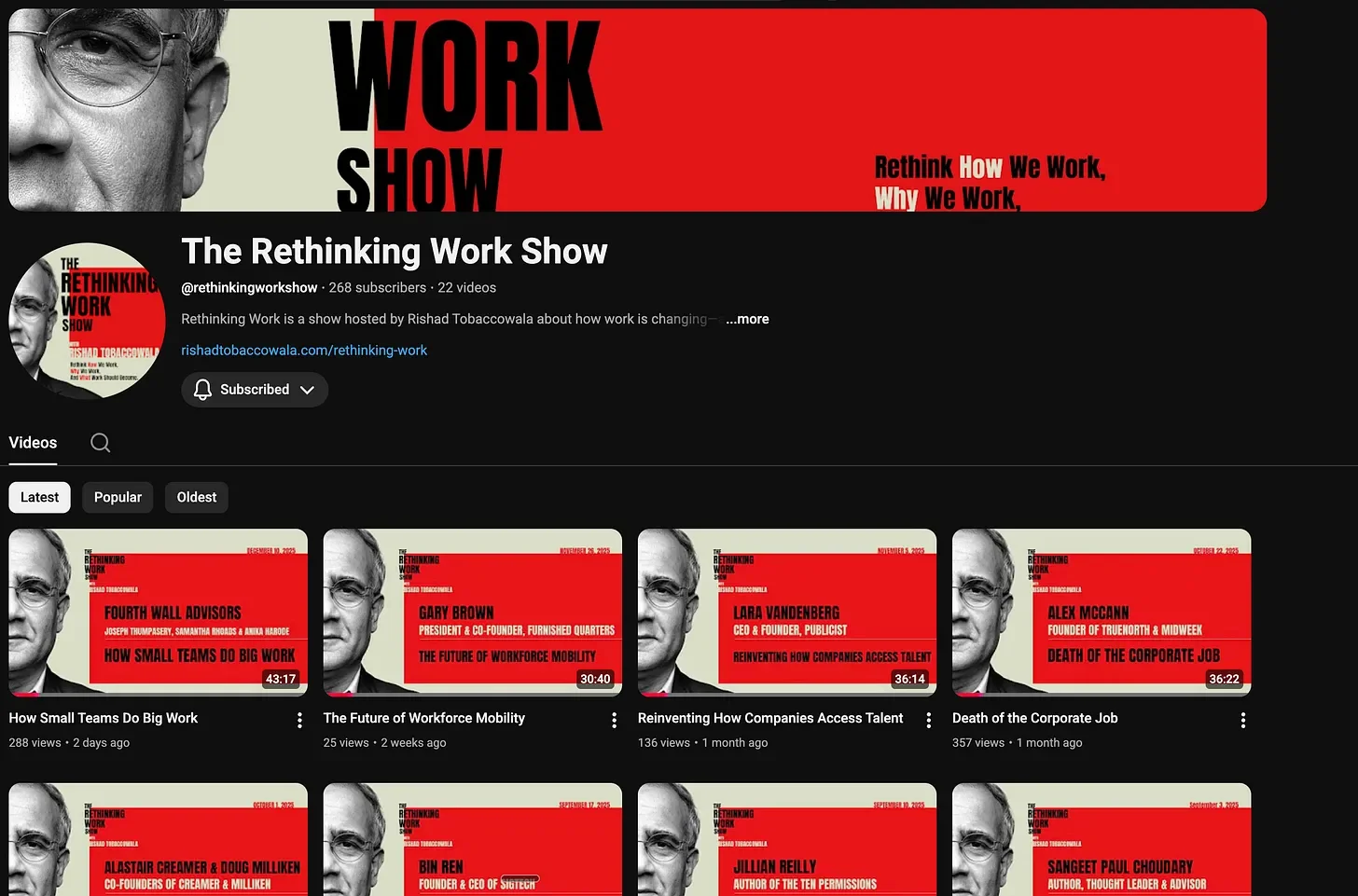
You can subscribe or access all the episodes on YouTube or on Spotify or Apple or specific episodes that might interest you via the individual links below. They will open your mind to the amazing rethinking of work that is underway and suggest ways you or your company can be best positioned.
The Four Themes
1. The office will be unbundled with talent combining three different types of locations to get work done: The three locations will include newly designed workspaces to maximize interaction and learning as well as present and pitch clients, third spaces like co-location spaces nearer where talent resides or events and experiences where teams spend time together and finally people working from home. Hybrid models will dominate but increasingly the demand for in-person presence will be customized to talent versus a one size fits model. The big shift will soon see the need to be in the office diminishing from 3 to 4 days a week to 3 to 4 days a month as leaders get retrained and companies find themselves at a cost and hiring disadvantage vs AI First/Talent Anywhere companies.
To learn more about the data and trends driving work from anywhere, listen to Harvard Business School Professor, Dr Prithwiraj Choudhury, the author of the new book “The World is Your Office. He brings data, facts and real stuff that makes one realize how silly the one model for everyone regardless of job, expertise or market forces plus forced march back to the office is. Just because one puts food in the cage the animals will not come back or stay a long while. Especially the best ones.
To understand how a company rethought its space for the new world listen to Andrew Graff the CEO of Allen & Gerritsen. By rethinking space he saved money, increased morale and turbo-charged new business.
How are architects rethinking space? Dan Cheetham CEO and Founder of FYOOG explains the keys to designing spaces that engage, inspire and delight. What if where people live became a core part of how they work?
Gary Brown, president and co-founder of Furnished Quarters, shares how workforce mobility is changing in a hybrid world, and why companies are shifting from hotels to flexible housing, what employees need to thrive on remote assignments, and how thoughtful living solutions can strengthen culture, retention, and performance.
2. Companies will increasingly access talent in far more flexible and agile ways: What happens when work stops being about full-time jobs and starts being about outcomes? Paul Suchman, Freddie Laker, and Juan-Carlos Morales of Chameleon Collective share how the rise of fractional leadership is reshaping companies, giving professionals more flexibility, and challenging traditional ideas of careers, culture, and collaboration.
What if companies could access top creative and marketing talent as easily as opening an app? Lara Vandenberg, founder and CEO of Publicist, shares how she built a platform that connects global brands with premium freelance talent, and why the future of work depends on flexible, trusted systems that empower both companies and creators.
What if you could tap into top talent, anywhere in the world, exactly when you need it? Luke Smith, CEO and co-founder of Croud, unpacks how the “talent on demand” model is reshaping teams and blending speed, scale, and flexibility without sacrificing culture or creativity. Since 2011, Luke has helped grow Croud into a full-service powerhouse, serving clients like Amazon Prime Video, Nespresso, and Ford. The company now spans 600 employees and a global network of on-demand experts known as “Croudies” across 118 markets and 86 languages.
What happens when AI becomes part of your workforce, not just your toolkit? MarkeTeam.ai Co-Founder Naama Manova-Twito and Board Members Clive Sirkin and Tony Weisman, share how AI coworkers are reshaping marketing workflows and why the future of marketing will be human-led, AI-empowered.
3. We may be seeing the beginning of the death of the corporate job as a new generation of talent turns away from them for a variety of reasons: What if the corporate job is no longer the default path to a meaningful career? Alex McCann, founder of TrueNorth, explains why so many young professionals feel lost at work, how Gen Z is redefining success, and why the future may belong to those who start with self-discovery instead of job titles. How can small teams now match, and even outperform, the output of much larger organizations?
The team at Fourth Wall Advisors is an example of a new type of firm. A 3 person hedge fund taking on the best of Wall Street. The team shares how AI-driven workflows, intentional design, and diverse, non-overlapping expertise are reshaping how work gets done. From reducing friction to unlocking deeper creativity and faster iteration, they explore why the future of high performance belongs to small teams built for curiosity, adaptability, and human connection.
What if being a company of one wasn’t just a structure, but a strategy? Flavia Barbat, editor-in-chief of Brandingmag, shares how professionals can build careers around clarity, substance, and intention in a world where content is everywhere but meaning is rare.
Is the most important approval you’ll ever need your own? Author and coach Jillian Reilly discusses her book The Ten Permissions, and why we struggle to let go of others’ expectations, and how to start giving ourselves permission to live and work on our own terms.
4. Talent and companies everywhere are now preparing for seismic changes that the new world of work is bringing: How is AI reshaping who holds power in the knowledge economy? Sangeet Paul Choudary, the best-selling author of Platform Revolution and Reshuffle explains how artificial intelligence is re-stacking the way knowledge is created, distributed, and monetized, and what this means for workers, companies, and the future of competitive advantage.
What if your career wasn’t just one job, but a collection of roles that reflect your skills, interests, and values? Ben Legg, co-founder and CEO of The Portfolio Collective, shares how the portfolio career model is helping professionals design more flexible, purpose-driven lives, and why the future of work may look more like a mosaic than a ladder.
How do we retrain millions of workers for jobs that don’t exist yet? Workforce futurist Andy Spence shares his learning about closing the skills gap, preparing for AI-driven change, and why retraining is the most urgent challenge facing the modern workforce.
How do you spot and grow the kind of leaders who can thrive in the age of AI? Jay Haines, co-founder and global president of Grace Blue, shares how expectations for leadership are shifting, what skills will define success in an AI-driven world, and why human potential still matters most.
What does a modern career path look like when the job market keeps changing?
Matt Moog is the Founder & CEO of Career Bird, a talent development platform explains how Career Bird empowers individuals to understand where they are, where they want to go, and how to get there, while giving companies the tools to retain top talent and foster continuous learning cultures.
What if the key to the future of work isn’t jobs themselves, but the skills that unlock them? David Timis, Global Communications & Public Affairs Manager at Generation, shares why building adaptable skills is more important than chasing job titles and how organizations like Generation are helping people prepare for meaningful, resilient careers in a changing world.
Why is culture a competitive advantage in the future of work and what makes for a great culture? Alastair Creamer and Doug Milliken, co-founders of Creamer Milliken describe culture as behavior where there is little to no gap between a company’s stated values and it’s lived value. They discuss accelerating culture change is essential for growth, how leaders can make transformation stick, and why the companies that thrive tomorrow will be the ones that reinvent from the inside out. Plus an incredible insight on how culture while about belonging is not about a space and the importance of “difference makers”
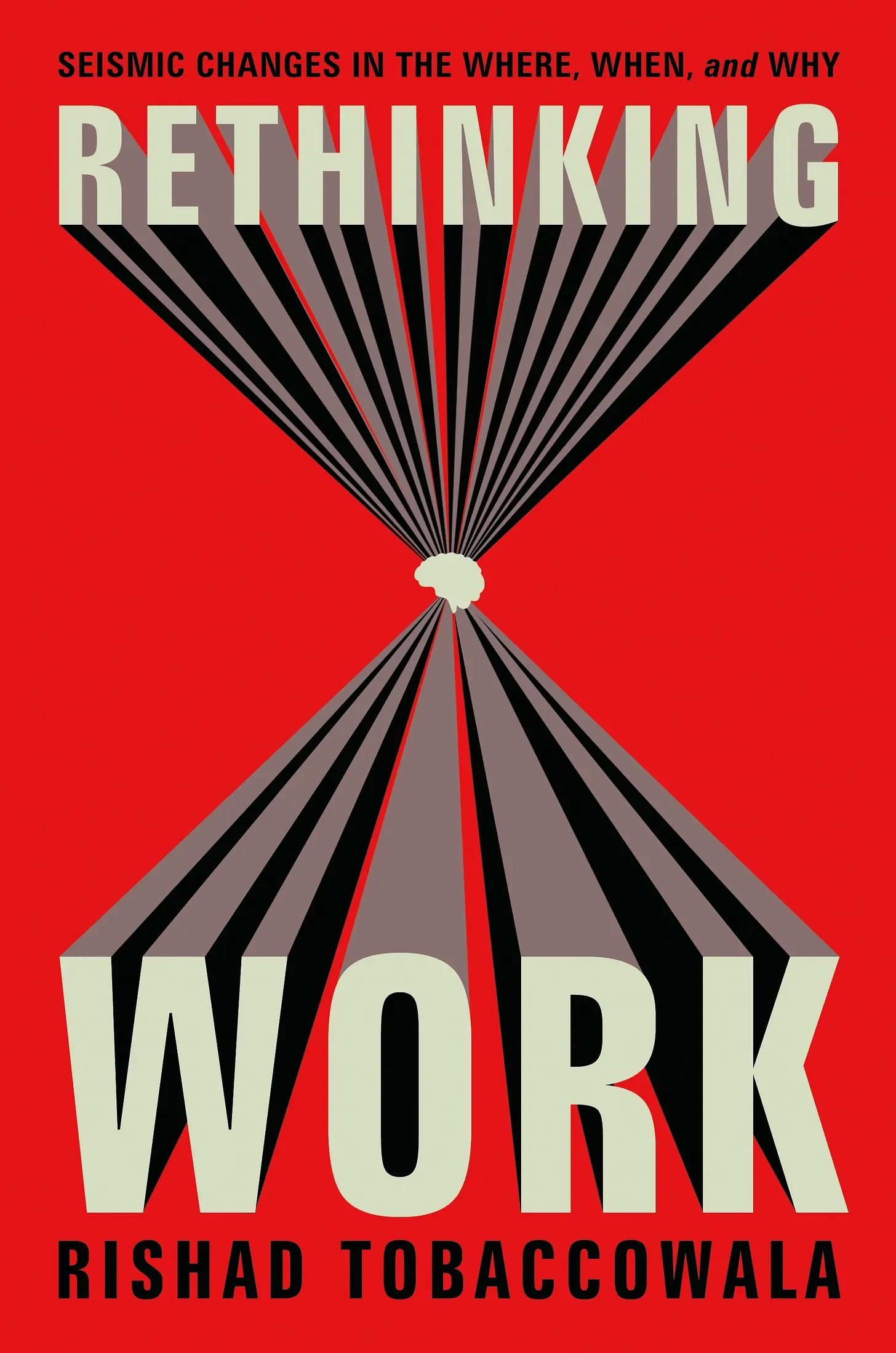
Rethinking Work is now reduced 66% to just $11 a copy on Amazon and just over Rs 300 in India. Available in many other countries around the world in hardcover and almost everywhere in digital format.
The book has sold tens of thousands of copies and is used by individuals and companies as a resource to understand and navigate the future of work. And here are all the places and formats the book can be bought.

Musings.

Appreciation.
Among the teachings of the Stoics is the ephemeral nature of life and the passing of time.
The followers of Wabi-Sabi in the Orient recognize the impermanence, imperfection, and incompleteness of all things.
The Poet Kate Ryan writes of the “joy of finding lost things”
And Carly Simon in “Anticipation” sings that she will stay right here because these are the good old days.
From all these individuals one learns three mental exercises to appreciate what we have:
Imagine a thing you own or a person or place you appreciate has been lost.
Imagine that you were doing something for the last time.
Imagine that the life you lead is the life that millions aspire to as you aspire to some other life.

Joy.
Experience, time, and observation reveals there are ways to architect joy.
Joy encompasses grace, flow, and connection.
The joyous exhibit graciousness, they tend to be in a state of flow and connected to both reality, other people, and some things higher and deeper.
The graceful combine a generosity of spirit, a sense of respect for others and a humility regardless of their level of excellence and skill.
When in a state of flow an individual is inside and outside time and this can come from being immersed in making things, building things, or creating things and from learning and seeking wisdom. Being able to connect the dots and see and understand things in new ways often gives one joy.
Joy often emanates from connection . This comes from having strong relationships to other people and to a higher cause or purpose. The ability to invest and grow connections tends to be associated with joy. In addition to human/family connections many gain joy by connecting to a higher cause or purpose.
Vagabonding.
Vagabonding is an outlook on life.
Vagabonding is about using the prosperity and possibility of the information age to increase your personal options instead of your personal possessions.
Vagabonding is about taking an extended time-out from our normal life-six weeks, four months, two years-to travel the world on your own terms.
Vagabonding is not a lifestyle, nor is it a trend. It’s an uncommon way of looking at life-a value adjustment from which action naturally follows. And as much as anything, vagabonding is about time-our only real commodity-and how we choose to use it.
Vagabonding has never been regulated by the fickle public definition of lifestyle. Rather, it has been a private choice within a society that is constantly urging to do otherwise.
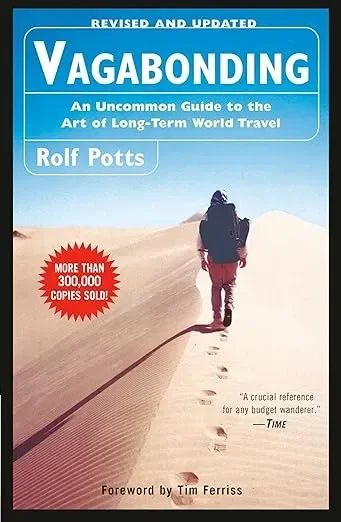
Have a library of over one hundred travel books including all the classics and among the best is a simple book published over twenty years ago that is book about travel but also a book about living called Vagabonding by Rolf Potts which reminds us that we and nobody else must determine how we live.

Enough.
Among the best if not the single best books on wealth is Morgan Housel’s “Psychology of Wealth”. If you have not read it you are truly missing out on a combination of wealth and life wisdom written with such a fusion of intelligence, insight, illumination and inspiration that you are unlikely to look at money, finance and wealth in the same way ever again.
There are many many lessons and practical applications in the book but a key underlying message is simply one word.
Enough.
Here is one story:
“At a party given by a billionaire on Shelter Island, Kurt Vonnegut informs his pal, Joseph Heller, that their host, a hedge fund manager, had made more money in a single day than Heller had earned from his wildly popular novel Catch-22 over its whole history. Heller responds, “Yes, but I have something he will never have … enough.” Enough. I was stunned by the simple eloquence of that word—stunned for two reasons: first, because I have been given so much in my own life and, second, because Joseph Heller couldn’t have been more accurate. For a critical element of our society, including many of the wealthiest and most powerful among us, there seems to be no limit today on what enough entails.”
― Morgan Housel, The Psychology of Money

Stories.
Joan Didion’s most famous sentence might be “we tell ourselves stories in order to live”
In many ways each of us is a compilation of stories. We intersect with other people who are a compilations of stories and when we meet it often like splicing two separate films into new stories about us versus just a story of you and me.
Today, amidst a timeline of algorithmic stories, curated stories, and monetized stories all embellished to pixel perfection, we hunger for stories that are real, relevant and which resonate to help us make sense of our lives and the world around us.
One way to do so is to read.
Read books.
Some quotes about books:
The book has proved one of the most useful, versatile, and enduring technologies in history. It’s portability, ease of reference and ability to concentrate a large amount of data made it indispensable. It is difficult to imagine how some of the greatest turning points in history would have been achieved without it.
Life without books would be a mistake.
One is twisted into a more complex shape when reading a great book.
The best books are like surgeons. They change you but you do not remember them, and they leave no external mark. Drugs get flushed from our system but not the best stories. One story can change you because it a sequence of language that produces a chemical reaction in the body.
Books are ways to escape ourselves. They are another form of dreaming. They are the magic of using black marks on a white page to conjure people and place out of nothingness. They are the closest we will be to becoming someone else or living someone else’s life.
Photographs by Rishad Tobaccowala

Time to ChatGPT/Gemini/Claude/Grok Oneself.

Midjourney to prompt “mirror with Open AI, Grok, Gemini and Claude logos”
A three step exercise that may be eye opening.
Repeat with all four engines (ideally with the paid versions to understand potential.)
Step One: Select your AI engine or engines.
Enter your name and ask it to write your obituary.
Upload as many appraisals or evaluations you have received. Ask for an analysis.
Ask why you are worth hiring or not worth hiring.
Interrogate each of these answers by asking for supporting evidence or question the analysis. Change tone of voice from appreciative to shocked. If it is a multi-modal engine ask for a visual to depict the answer. Ask it to write a slogan or a song.
These steps will make us realize how much the Alien Intelligence (my term for AI) already knows about everyone. This versus Search or LinkedIn is how people will begin analyzing others and companies evaluating talent.
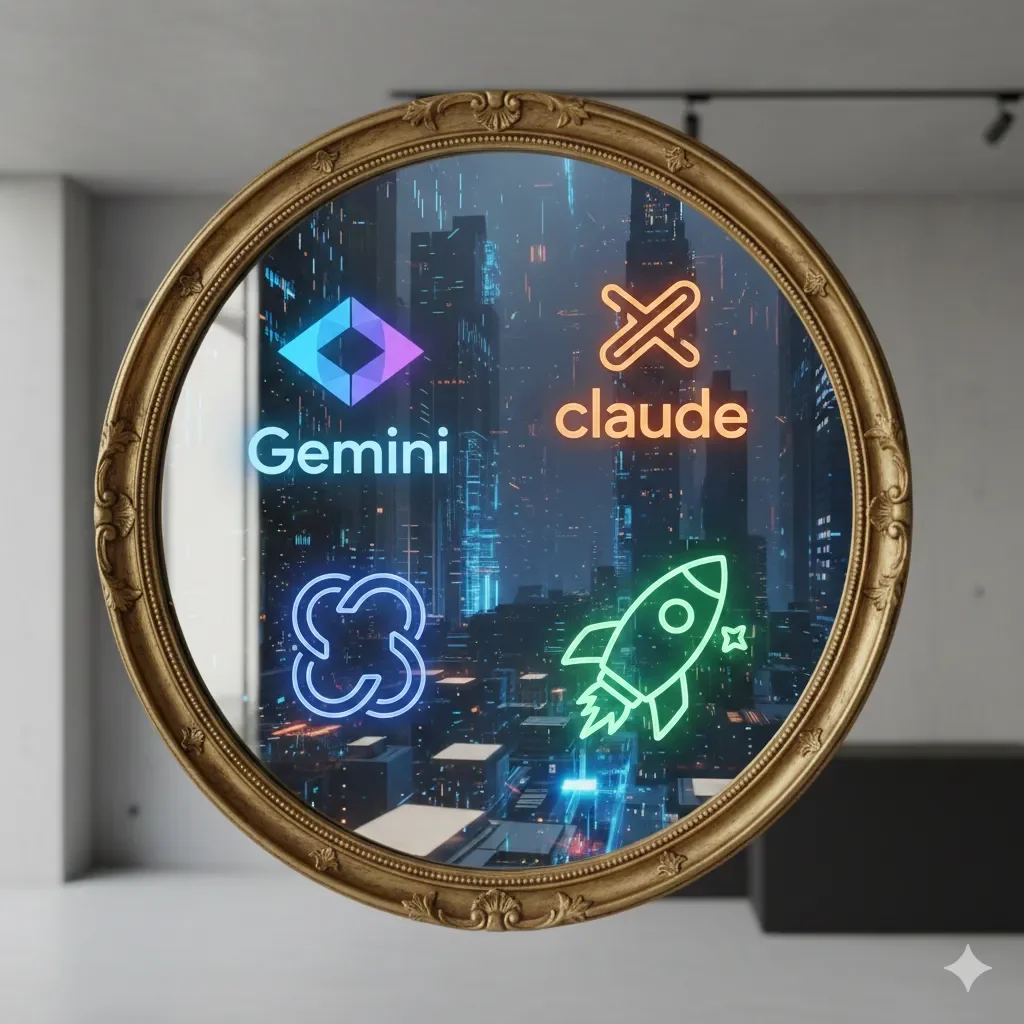
Gemini Nano Banana to prompt “mirror with Open AI, Grok, Gemini and Claude logos”
Step Two: Ask other humans these questions. Then ask yourself. Then AI.
Three people outside of their immediate family that have been most impactful in their life positively? And negatively?
Three most transformational experiences (good or bad) that have shaped them?
If they had 10 years to live what would they change moving forward and why?
These really get true conversations going with others and oneself. These are conversations with intense meaning, deep feeling, and human emotion. Now check how these answers compare with that of the different AI engines.
Also note how you might keep asking more questions and follow ups with different tones of voice to the AI versus real humans or yourself. What do these longer and deeper conversations reveal about other people, the machine and ourselves.
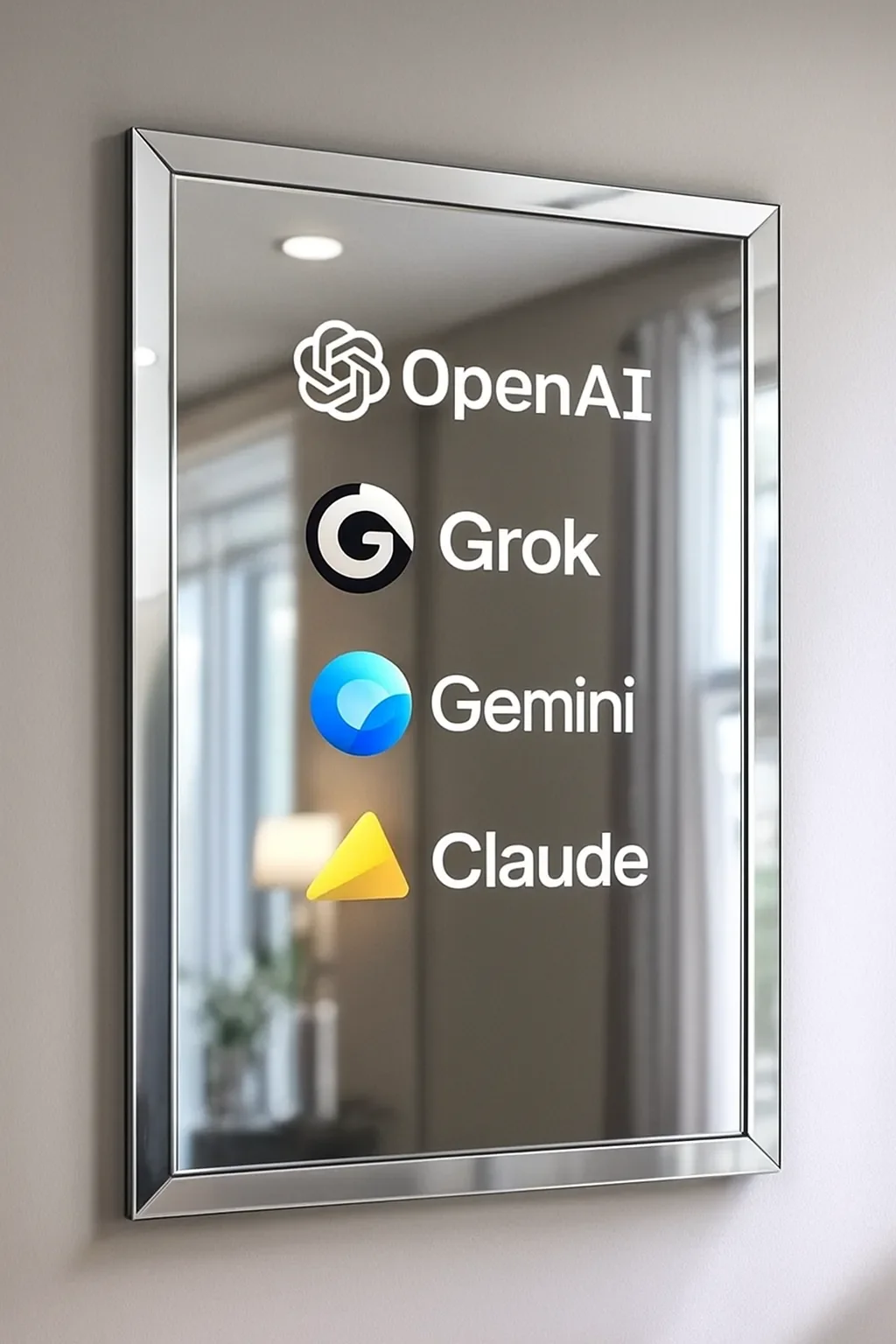
ChatGPT to prompt “mirror with Open AI, Grok, Gemini and Claude logos”
Step Three : Ask your manager these questions. Then ask yourself. Then ask AI.
How much of my job will be done by an Agent 2 years from now and what will happen to me?
Do they worry if they themselves will become irrelevant soon?
How would they attack their own company to defeat it?
These remind us that every company, every job and every career will be dramatically changed in less then 500 days and we all need to reinvent fast.
It also reveals how much company data has already been uploaded by employees or others into the public domain. Very little is secret.
For these answers pretend the AI is BCG, or Mckinsey or Bain and ask it to provide recommendations, analysis and action steps. This is why Mckinsey already has 12,000 agents to its 40,000 humans and is expects the ratio to be 1 to 1…
Try these exercises as a way to embrace AI, adapt your career/life and identify where one can complement the machine.